born in 1915, Édith Piaf was the embodiment of the tragic and the beautiful, a symbol of hope amidst the chaos.

  • The Unglamorous Work That Actually Scales a Business


    Nobody’s selling courses on inventory reorder points. But that’s the work that actually changed everything for me.

    I see a lot of content about “7-figure launches.” I also see videos on “how I scaled to six figures in 6 months.” Honestly? Most of it feels disconnected from the reality of actually building a business from the ground up. Especially when you’re doing it as a single mother with no formal business training, learning everything by trial and error.

    You know what actually transformed my business? A Google Sheet that tells me when I’m about to run out of my bestsellers. An email flow that sends the right message to the right customer at the right time. A Sunday morning routine where I batch content instead of scrambling daily.

    Not glamorous. Not course-worthy. But these systems are why I can run two brands without burning out. Why I can be there with my daughter. Why the business runs even when I’m not actively working.

    Let me show you the work nobody talks about because it doesn’t sell well—but it’s what actually builds something sustainable.

    The Inventory System I Figured Out By Making Expensive Mistakes

    I transitioned from doing nails in my studio to running an e-commerce business. I thought the hard part would be marketing. Getting people to buy. Building a website.

    Turns out, the hardest part was figuring out what to keep in stock and when to reorder it.

    I learned this the expensive way.

    I’d run out of products customers wanted because I had no system for tracking what was moving fast. Someone would place an order, I’d go to pack it, and realize I had zero inventory left. Then I’d have to refund or delay while I waited for more stock. Not exactly the customer experience I wanted to create.

    I’d over-order things that sat on shelves because I personally loved them or thought they’d sell. My taste isn’t always my customers’ taste. I had thousands of dollars tied up in products nobody was buying. At the same time, I was short on cash to reorder the things that actually moved.

    When I was low on something, I would panic-order. I often paid for rush shipping. I sometimes ordered way more than I needed. I was unsure when I’d have time to think about it again.

    This is what kept me in survival mode. Always reacting, never planning. Always busy, never building.

    I knew something had to change, but I had no formal training in inventory management. No business degree. No mentor teaching me the “right” way.

    So I started observing patterns. What was selling consistently? What sat? How long did it take to get new stock from suppliers? What did I actually need on hand vs. what was just taking up space?

    Here’s what I built:

    A Google Sheet. That’s it. Nothing fancy.

    But this sheet tracks:

    • How much of each product I have right now
    • How fast it’s selling (I check this by looking at 30 days of sales)
    • When I need to reorder (before I actually run out)
    • How long my supplier takes to ship
    • What I’m actually making per product (not just what it sells for, but what I keep after costs)
    • What hasn’t moved in 60+ days (so I can discount it or stop carrying it)

    Every Monday morning, I look at this sheet for 30 minutes. It tells me exactly what to order. No guessing. No panic. No running out of bestsellers while drowning in slow movers.

    What changed:

    I cut the money sitting in dead stock by about 40% within six months. That was thousands of dollars freed up. I can use this money to actually grow the business. It won’t just sit on a shelf.

    I stopped running out of the products people actually want, which meant fewer frustrated customers and fewer lost sales.

    My ordering shifted from chaos to calm. This system tells me what I need. I order it. It arrives. Simple.

    I can see at a glance what’s actually making me money vs. what’s just generating activity.

    This system took me maybe 3 hours to build. I figured it out by tracking what mattered, not by pursuing some textbook formula. Now it saves me hours every week and probably thousands of dollars a month in better inventory decisions.

    Nobody teaches this because it’s not glamorous. But this system has done more for my bottom line than any marketing tactic I’ve tried.

    The Batching System That Barely Works (And Why That’s Okay)

    Let me be really honest about content batching. I see a lot of people teaching perfect systems. Mine is far from perfect.

    The plan: Every other Sunday, I create content for both brands. I write, outline, draft, schedule. Then I’m set for two weeks and don’t have to think about it.

    The reality: Some Sundays this works beautifully. Other Sundays my daughter needs me, or I’m exhausted, or the words just aren’t flowing. Life happens. This approach bends.

    But here’s why I keep doing it anyway:

    Even when my batching only works 60% of the time, I’m posting more consistently. It’s much better than when I had no system at all. Back when I was trying to create content “when inspiration strikes,” inspiration struck maybe once a month.

    This setup gives me a framework. Even on weeks when I don’t execute perfectly, I have something to fall back on. I can do a shorter version. I can create one piece instead of four. The structure holds even when I can’t do it all.

    What it actually looks like:

    Sunday morning (when it works):

    • I review my running list of ideas—things customers asked, patterns I noticed, problems I solved that week
    • Pick 4-6 topics that feel right
    • Use Claude to help me structure outlines (this saves so much time)
    • Write first drafts, then go back and add my voice, my specific examples, the parts that come from lived experience

    Throughout the week:

    • 30-minute sessions to polish one piece
    • Hit publish when it’s 80% there, not 100% perfect
    • Let my automation tools handle distribution

    When it doesn’t work:

    • I skip Sunday but still aim for 1-2 pieces that week
    • I write shorter posts instead of comprehensive ones
    • I remind myself that consistency matters more than perfection

    The real truth: I miss my batching sessions probably 40% of the time. But having the setup means I still show up 1-2 times per week instead of disappearing for months.

    That consistency, even imperfect consistency, is what builds trust. Not the perfect execution of a perfect system.

    This is something I learned as a single mother—you do what you can with what you have. Some days you have two hours for content. Some days you have twenty minutes. The setup adapts to your reality instead of demanding you adapt to it.

    The Automation Setup Nobody Warns You About

    Everyone talks about automation like it’s magic. Set it up once, never touch it again, suddenly you have free time and money.

    Here’s what they don’t tell you: building automation is tedious. It breaks. It requires maintenance. And it’s still absolutely worth it.

    What I’ve automated:

    Customer segmentation: When someone buys from my e-commerce store, n8n automatically tags them in Kit based on what they purchased. Then they get relevant emails about how to use the product, what pairs well with it, education they need.

    This task used to take me hours every week. I manually sorted through orders. I had to remember to follow up. I tried to send the right information to the right people. Now it happens automatically.

    Setting this up took me probably 10 hours initially. I watched YouTube tutorials, tried things that didn’t work, started over. It broke three times in the first month and I had to troubleshoot. But now it runs, and it saves me 4+ hours every single week.

    Content distribution: When I publish a blog post, systems I’ve set up distribute it to social platforms. They also trigger Claude to create adapted versions for different channels. Additionally, they pull it into my newsletter workflow.

    This took about 6 hours to build. It broke. I fixed it. It broke again. I learned. Now it works most of the time, and when it doesn’t, I know how to fix it quickly.

    Inventory alerts: My Google Sheet checks stock levels and emails me when anything hits the reorder point. Simple, but it means I’m not manually checking inventory every day.

    The reality of automation:

    It’s not “set it and forget it.” It’s “set it, watch it, fix what breaks, adjust what doesn’t work quite right, and keep it.”

    Tools update. AIs change. What worked last month suddenly stops. I spend maybe 2-3 hours a month just keeping my automation’s running.

    But here’s why it matters:

    That customer segmentation saves me 4 hours a week. Even accounting for maintenance time, I’m saving 13+ hours every month.

    The content distribution saves me 2 hours per post. That’s 4-8 hours a week I’m not copying and pasting content to five different platforms.

    The real value isn’t just time—it’s mental space. I’m not trying to remember to tag customers, or check inventory levels, or manually distribute content. The systems handle it, which frees my brain up for the work that actually requires me.

    The strategic thinking. The relationship building. The creative problem-solving.

    The Financial Tracking That Changed How I Make Decisions

    I’m not an accountant. I don’t have a finance degree. I learned to do nails, not analyze spreadsheets.

    I track my numbers every single week. I figured out early on that you can’t manage what you can’t see.

    What I track weekly:

    • Revenue by product type
    • Actual profit (not just revenue—what I keep after all costs)
    • How much it costs me to get a new customer
    • How many customers buy again
    • How fast inventory moves
    • Cash flow (money coming in vs. going out)

    All of this lives in Google Sheets. Nothing fancy. Just consistent tracking that lets me see patterns over time.

    What this tracking taught me:

    Some products that sell really well barely make me any money. I was pushing products that generated activity but not profit. That insight shifted what I focus on.

    About 35% of my customers buy again. That number told me I needed better follow-up systems, which led to the email automation I built. Now that number is climbing.

    I was spending too much to acquire customers compared to what they spent. That data shifted my focus to increasing order value and repeat purchases instead of just chasing new customers.

    Certain product categories have way better margins. Now I stock more of those and less of the thin-margin stuff.

    This tracking takes me about 30 minutes every week. It’s boring. It’s not creative. It doesn’t feel productive in the moment.

    But it’s probably the most important 30 minutes I spend all week because it shows me what’s actually working vs. what just feels good.

    I learned this by making expensive mistakes. By ordering products that didn’t sell. By chasing customers who weren’t profitable. By being busy without being strategic.

    The numbers don’t lie. They show you patterns if you’re willing to look.

    The Customer Service Systems That Let You Scale Without Losing the Personal Touch

    When I was doing nails in my studio, customer service was easy. I knew every client. I read their face, adjust in the moment, build real relationships.

    E-commerce is different. I can’t personally respond to every email, but I also refuse to lose the personal touch that builds loyalty.

    So I figured out a system that handles volume while keeping the human element where it matters.

    How I handle customer inquiries:

    Common questions (mostly automated): About 60% of customer emails are the same questions. “Where’s my order?” “What’s your return policy?” “How do I use this?”

    Kit handles these with automated responses that include the customer’s specific order details, their name, relevant information. They’re templates but personalized.

    This frees me up to focus on the emails that actually need me.

    Product questions (AI-assisted but human-reviewed): About 30% of emails are product-specific. “Will this work for my nail type?” “What’s the difference between these two products?”

    I use Claude to help draft responses. I feed it the question and relevant product information. It generates a helpful answer. Then I edit for accuracy, add context it doesn’t have, make sure it sounds like me.

    This cuts response time in half without sacrificing quality.

    Complex situations (fully personal): About 10% of emails are problems, complaints, or unusual situations. These need me personally. And honestly, these are often where the strongest relationships get built.

    When someone has a real problem and I solve it well, they become a loyal customer. So I give these my full attention.

    The result: I’m spending 4-5 hours on customer service instead of 10-12, but the quality is better. The routine stuff gets handled fast and accurately. The complex stuff gets my full attention and care.

    This is how you scale without losing what makes you different.

    The Supplier Relationships That Save You When Things Go Wrong

    Here’s something nobody talks about: your business is only as stable as your supplier relationships.

    I spend time building actual relationships with the people who supply my products. Not transactional check-ins, but real relationships built on communication, reliability, and mutual respect.

    This isn’t automated. It can’t be. It’s phone calls and emails and treating people like partners.

    What this looks like:

    • Monthly check-ins with key suppliers
    • Sharing what’s selling well so they understand my business
    • Asking about new products or changes coming
    • Paying on time, every time
    • Communicating when I need something instead of hoping they’ll read my mind

    Why it matters:

    I miscalculated holiday demand. I was about to run out of bestsellers. My supplier rushed an order for me because we had a relationship. They didn’t have to do that.

    When a product formula changed, it caused customer issues. My supplier gave me advance notice, so I can prepare.

    When I needed better terms to manage cash flow, we had a conversation about it because there was trust built.

    These relationships are invisible to customers. They don’t show up on social media. But they’re what allows me to run a stable business instead of constantly scrambling.

    I learned the value of this working in the nail studio. The suppliers treated me well. They communicated and saw me as a partner. Those were the ones I stayed loyal to. Now I’m on the other side, and I build the same kinds of relationships.

    What Actually Scales vs. What Just Looks Good

    Let me be direct about this because I see too many people chasing the wrong things.

    What gets attention but doesn’t build:

    • Viral posts that disappear in 48 hours
    • Hustle culture that burns you out before you build anything real
    • “7-figure launch” tactics designed for people with teams and budgets you don’t have
    • Posting constantly with no strategy behind it
    • Copying what works for someone in a completely different situation

    What’s boring but actually compounds:

    • Systems that prevent problems instead of just reacting to them
    • Tracking numbers so you can see patterns
    • Automation that handles repetitive work
    • Real relationships with suppliers and customers
    • Consistent content that builds authority over time
    • Email flows that nurture customers toward buying again
    • Understanding your actual profit, not just revenue

    The first list gets likes. The second list builds businesses that last.

    I know this because I’ve tried both. I’ve chased the exciting stuff. I’ve burned out trying to do what worked for someone else. I’ve learned—the hard way—that sustainable businesses are built on fundamentals, not hacks.

    Why This Work Matters More Than Strategy

    You want to know what I’ve learned building two brands as a single mother with no formal business training?

    Strategy matters. But systems matter more.

    You can have the best strategy in the world. If your inventory system is broken, you’ll run out of stock. If your financial tracking doesn’t exist, you won’t know what’s actually profitable. If your automation doesn’t work, you’ll be buried in manual tasks.

    The glamorous stuff—the marketing, the launches, the growth tactics—only works when the foundation is solid.

    I didn’t learn this from a textbook. I ran a studio and did everything myself. Then, I transitioned to e-commerce and realized I needed different systems. I learned it by making expensive mistakes. By staying up late fixing problems that have been prevented with better systems.

    The work I’m sharing here isn’t theoretical. It’s what I do every week to keep two brands running without burning out. It’s what allows me to be attentive with my daughter. It’s what makes it possible to build instead of just survive.

    Here’s what I want you to think about:

    What’s one fundamental system you build this quarter that would make your business run smoother?

    Not a growth tactic. Not a marketing strategy. A foundational system.

    Maybe it’s:

    • Tracking inventory so you know what to reorder before you run out
    • Segmenting your customers so you can send them relevant information
    • Monitoring your actual profit so you know what’s worth your time
    • Batching work so you’re not constantly context-switching
    • Automating something you’re still doing manually that doesn’t need your judgment

    Pick one. Build it messy. Use it. Make it better as you go.

    This is how you build something sustainable. Not by finding the perfect strategy or the secret hack. By doing the unglamorous foundational work that makes everything else possible.

    That’s what scales. Not the flashy stuff.

    The boring, consistent, fundamental work that nobody sells courses on because it’s not exciting enough.

    But it’s what actually works.


    Michele Alexandria

    P.S. – If you’ve built unglamorous systems that actually made a difference in your business, I’d love to hear about them. I genuinely want to know. Not the exciting stuff—the foundational, operational things that made your business run better. Reply to this email or DM me. These are the conversations that matter.



  • Building Two Brands as a Solo Founder: What I Learned

    Running two brands isn’t twice the work – it’s a completely different skill set.

    When people find out I’m building two separate brands at the same time, the first question is usually “why?” followed quickly by “how do you have time for that?”

    Here’s the truth: I don’t have more time than anyone else. I’m a single mother running an e-commerce nail supply business while building a personal development platform for entrepreneurs. I have the same 24 hours everyone else has, and most of those hours are already spoken for.

    So no, I’m not doing twice the work. I’m doing different work. And understanding that difference is what makes this sustainable instead of impossible.

    The Two Brands (And Why They’re Separate)

    Brand 1: Nail Supply E-Commerce This is product-based. Operational focus. Inventory management, customer service, order fulfillment, supplier relationships. It serves people looking for quality nail products and education about nail health. The business model is straightforward – people buy products, I fulfill orders, they get results.

    Brand 2: Personal Development for Entrepreneurs This is knowledge-based. Content-heavy. It serves people transitioning from service work to scalable business models. It also serves solo founders building systems. Additionally, it serves entrepreneurs learning to leverage AI and automation. The business model is still forming – right now it’s audience building and authority establishing.

    Why they’re separate:

    People ask if I should just combine them. “You teach nail techs how to build e-commerce businesses. You make it one thing.”

    I thought about it. I really did. But here’s what I realized:

    These brands serve different needs for different people at different times. Someone searching for “how to strengthen damaged nails” doesn’t want entrepreneurship content mixed in. Someone looking for “how to transition from service business to product business” doesn’t care about nail health.

    Combining them would dilute both. It would confuse both audiences. And honestly, it would limit what I can talk about in each space.

    The nail supply business gives me credibility and revenue. The entrepreneurship content gives me a way to share what I’ve learned building that business. They’re connected, but they serve different purposes.

    Keeping them separate isn’t making my life harder. It’s giving each brand room to be what it needs to be.

    What I’ve Actually Learned Running Both

    Different audiences need different content strategies

    My nail supply customers are searching Google for specific problems. “Why are my nails peeling?” “Best products for natural nails.” They need educational content that answers their questions and guides product selection. Short, practical, problem-solving content works best.

    My entrepreneurship audience is on a different journey. They’re looking for frameworks, systems thinking, operational insights. They need deeper content that helps them think differently about their businesses. Longer posts, detailed processes, honest struggles resonate here.

    I tried using the same content approach for both. Didn’t work. They need different things delivered differently on different platforms.

    For the nail business, I focus on search-optimized product guides and nail health education on my website. For the entrepreneurship brand, I’m building thought leadership through blog posts. I also create newsletters that document what I’m learning in real time.

    Shared infrastructure makes both possible

    Here’s where it gets interesting: even though the brands are separate, the systems supporting them are shared.

    The content batching workflow I built? Works for both brands. Every other Sunday, I batch content across both. I’m already in creation mode – switching between brand topics is easier than switching between creation mode and operations mode.

    The AI tools I use? Serve both brands. I use AI to help with product descriptions for the e-commerce site and with content outlines for the entrepreneurship blog. Same tools, different applications.

    The automation I’ve set up? Supports both. WordPress with Jetpack auto-distributes content to social platforms. Customer communication sequences in the e-commerce business taught me how to build email sequences for the entrepreneurship audience.

    The mindset of systems-first thinking? That carries across everything. If I build an inventory management system for the nail business, I learn about systems design at the same time. I can then teach this in the entrepreneurship content.

    This is the part people don’t expect: running two brands doesn’t mean building two completely separate infrastructures. The operational skills and systems you build for one often strengthen the other.

    Time allocation is the real challenge

    Let me be honest about this: figuring out where to put my energy every day is challenging. It is harder than any single task I do.

    Some days, the e-commerce business needs me. Inventory to manage, customer issues to solve, supplier communications. That’s the revenue-generating business that pays the bills.

    Other days, I need to invest in the entrepreneurship brand. Write content, build audience, set up authority. That’s the future business that’s still being built.

    The tension is real: every hour I spend on one is an hour I’m not spending on the other. And as a solo founder, there’s no team to pick up the slack.

    I don’t have this perfectly figured out, but here’s what I’m learning:

    The e-commerce business gets priority for operations. Orders must be fulfilled, and inventory must be managed. Still, it mostly runs on systems now. I’ve automated enough that it doesn’t need constant attention.

    The entrepreneurship brand gets priority for creation and relationship building. This is where I’m actively building, so it needs more focused attention right now.

    I time-block my weeks. I dedicate operations time for the e-commerce business in the mornings, usually. I also block off specific days for creation time for the entrepreneurship content. If I don’t protect that time, the urgent always drowns out the important.

    The unexpected advantage I didn’t see coming

    Here’s what surprised me: each brand makes the other stronger.

    Running the e-commerce business gives me real operational experience to share in the entrepreneurship content. I’m not theorizing about inventory management or customer systems – I’m actively using them. That lived experience makes the content more credible and more useful.

    Building the entrepreneurship brand forces me to articulate what I’m doing in the e-commerce business. When I write about systems or automation or scaling, I have to understand it clearly enough to explain it. That clarity improves how I actually run the e-commerce business.

    The e-commerce business provides case studies, examples, and real-world testing for everything I teach. The entrepreneurship brand provides accountability to actually implement the systems I talk about.

    They’re not competing for resources – they’re creating a feedback loop that strengthens both.

    The Honest Challenges I’m Still Working Through

    Context switching is expensive

    Moving from “e-commerce operator managing inventory” to “thought leader writing about entrepreneurship” requires mental recalibration. I’m using different parts of my brain, speaking to different audiences, thinking about different problems.

    Some days, that switch happens smoothly. Other days, I spend 30 minutes just getting into the right headspace for whichever brand I’m working on.

    I’ve learned to batch by brand when possible. Handle all e-commerce tasks in one time block, all content creation in another. Minimizes the switching.

    But I haven’t eliminated it. It’s still a tax I pay for running both.

    Maintaining consistency in both is hard

    The e-commerce business has to be consistent – orders must be fulfilled, inventory must be managed, customers must be served. Non-negotiable.

    The entrepreneurship content? That’s where consistency slips when life gets busy. It’s easier to skip a blog post than to skip fulfilling orders.

    I’m working on treating content creation with the same non-negotiable consistency as business operations. Building it into my schedule as a commitment, not an “if I have time” task.

    But I’ll be honest: some weeks the content doesn’t happen because the business demands more attention. I’m still figuring out the balance.

    The urge to combine them for simplicity is real

    There are moments when running two separate brands feels unnecessary complicated. Wouldn’t it be easier to just focus on one thing?

    Probably. But easier isn’t always better.

    I keep coming back to the strategic reason for separation: each brand serves a different purpose and audience. Combining them for my convenience would make both less effective.

    Still, the temptation is there. Especially on weeks when I’m tired and managing both feels like a lot.

    I remind myself: this isn’t about easy. It’s about building what I actually want to build. I want an e-commerce business that provides revenue and stability. I also want a platform to share what I’m learning with people who need it.

    Managing energy across two distinct identities

    This is the one I didn’t expect: these brands need different energy from me.

    The nail supply business is operational Michele. Problem-solver, system-builder, operator. That’s a focused, analytical energy.

    The entrepreneurship brand is vulnerable Michele. Sharing the messy middle, admitting what I don’t know, building in public. That’s a more exposed, relational energy.

    Both are authentically me, but they pull from different wells.

    Some days I have operational energy but not vulnerable energy. Other days I’m ready to write honestly but not ready to solve logistics problems.

    I’m learning to work with my energy instead of against it. If I wake up ready to solve problems, that’s an e-commerce day. If I wake up with clarity about something I want to share, that’s a content day.

    The flexibility helps. But it also means I can’t always control which brand gets my best energy on any given day.

    What’s Actually Working

    The batching approach

    I talked about this in my systems post. It’s worth repeating. Batching content creation has been the key to maintaining both brands without burning out.

    Every other Sunday, I create content for both brands in one session. I’m already in creation mode – as well use it across both.

    This isn’t perfect (see earlier note about consistency challenges), but when I stick to it, both brands get fed.

    Using AI to preserve both

    I use AI tools for:

    • First drafts of product descriptions (nail business)
    • Content outlines and idea expansion (entrepreneurship brand)
    • Email sequences for both brands
    • Basic customer service templates

    The AI doesn’t replace my voice or experience. But it handles the grunt work of getting ideas out of my head. It helps in forming a rough draft. That probably saves me 10+ hours per week across both brands.

    Without AI, I don’t think managing both would be sustainable. It’s the leverage that makes this possible.

    Content repurposing where appropriate

    Some content naturally crosses over. A post about building systems for my e-commerce business can inform a product guide about nail care routines. Both are about systems and consistency.

    I don’t force it, but when the crossover is natural, I use it. Write once, apply to both brands with appropriate context.

    This isn’t about duplicating content – it’s about recognizing when the underlying principle serves both audiences.

    Clear boundaries for each brand’s purpose

    I’ve gotten clear about what each brand is FOR:

    The nail business is for serving customers who want quality products and education about nail health. Every decision gets filtered through: does this serve that customer better?

    The entrepreneurship brand is for sharing what I’m learning building scalable businesses as a solo founder. Every decision gets filtered through: does this help someone who’s where I was a year or two ago?

    When I’m tempted to blur the lines, I come back to purpose. That clarity keeps both brands focused.

    What I’d Tell Someone Considering This

    If you’re thinking about building multiple brands or income streams at the same time, here’s what I’d want you to know:

    It’s not about having more time – it’s about using systems and leverage. I don’t have twice the time. I have systems that make the operational business run without constant attention, and AI that helps me create content faster. That’s what makes room for both.

    Keep them separate if they serve different purposes. Don’t combine things just because it seems simpler. Separate brands can both thrive if there’s strategic reason for the separation.

    Shared infrastructure makes both stronger. The systems you build for one brand often support the other. Look for ways to leverage the same tools, workflows, and operational approaches across both.

    Energy management matters more than time management. You’ll have days when you have energy for one brand but not the other. Work with that instead of fighting it.

    Start with one profitable, then build the second. I didn’t start both brands from zero at the same time. The e-commerce business was established and running on systems before I started building the entrepreneurship brand. That financial stability and operational foundation matter.

    The Real Question

    If you’re managing multiple income streams or considering it, here’s what I want to know:

    What systems make it sustainable for you?

    Because this isn’t about hustle or working twice as hard. It’s about finding the leverage points – the systems, the automation, the shared infrastructure – that make multiple streams manageable.

    I’m still figuring this out. Some weeks it feels smooth. Other weeks I wonder if I’m making my life unnecessarily complicated.

    But when I look at what I’m building, I see a business that provides stability. It’s also a platform that lets me share what I’m learning. I know it’s worth the complexity.

    The question isn’t “should you build multiple brands?” The question is “what systems do you need to make it sustainable?”

    What’s your answer?


    Michele Alexandria

    P.S. – If you’re running multiple businesses or income streams, I’d love to hear about it. What systems make it work? What challenges are you still working through? Reply to this email or DM me. I’m genuinely curious how other people navigate this.

  • Why I’m Finally Posting Imperfectly (And What It’s Teaching Me)

    I almost didn’t publish this post.

    I’ve rewritten the opening three times. I keep thinking it needs more polish, better structure, stronger insights. But here’s what I realized: that voice keeping me from posting? It’s the same voice that used to keep me working in the studio until I was burnt out. I couldn’t trust anything to be good enough unless I did it myself.

    I know how to spot an inefficient system when I see one. And perfectionism? That’s the most inefficient system I’ve been running.

    So I’m hitting publish anyway. Imperfectly. While that voice is still talking.

    What Perfectionism Actually Looked Like in My Business

    I used to think perfectionism was about being organized and detail-oriented. I run an e-commerce business – I manage inventory, track numbers, build systems. I’m detail-oriented by necessity.

    But that’s not what perfectionism is.

    Perfectionism looked like this:

    I’d draft a post, read it multiple times, and decide it wasn’t valuable enough. Not because it was objectively bad. But because I imagine it being better. And if better existed somewhere, why would I publish this version?

    I’d look at people who’ve been creating content for years and think my work didn’t measure up. Never mind that they had teams, experience, years of practice. The comparison stopped me anyway.

    I’d convince myself I needed better graphics, better timing, more polish. The “right time” was always just around the corner. Spoiler: it never came.

    I deleted so many drafts. Posts that were probably fine, but didn’t feel amazing. They stayed in my Google Drive while my audience forgot I existed.

    I justified the silence by calling it “quality over quantity.” Which sounds strategic until you realize you’re posting nothing at all.

    Here’s what I know from running operations: if a system consistently produces no output, it’s a broken system. Doesn’t matter how good the intention is.

    My content system was broken.

    What This Actually Cost Me (And I Mean in Real Terms)

    Let me be specific about what this cost, because it wasn’t just about “not posting enough.”

    6-8 week gaps with zero content. As someone trying to build thought leadership alongside an e-commerce business, that’s not a strategy. That’s invisibility.

    Starting from zero every time. I’d finally post something, then disappear for weeks. Every post had to rebuild momentum from scratch. It’s like running inventory management where you let everything sell out before you reorder. Inefficient and expensive.

    Lost customer relationships. The people searching for nail health information didn’t find my content. The service providers looking to transition to e-commerce missed it. The single mothers trying to build something scalable overlooked it because it was sitting in drafts.

    Mental overhead that drained energy from actual business operations. The hours I spent debating whether a post was good enough? That was time I have spent building systems, managing inventory, serving customers. The perfectionism was expensive.

    Missed business growth. While I was perfecting, my competitors were posting. While I was worrying about quality, other people were building audiences and authority. Perfectionism didn’t protect me – it held me back.

    I’m good at spotting where a business is hemorrhaging money or time. I finally had to admit: perfectionism was both.

    The Pattern I Started Noticing

    I solve problems by observing patterns. That’s how I figured out inventory management, customer communication systems, content batching. I watch what’s happening, find the pattern, adjust the approach.

    So I started watching my own patterns with posting.

    The pattern looked like this:

    1. Have an idea based on something I learned or a question someone asked
    2. Write a draft
    3. Read it and think “this needs work”
    4. Set it aside to “polish later”
    5. Later never comes
    6. Repeat

    I recognized this pattern. It’s the same one that kept me doing everything manually in my business before I started building systems. “I’ll automate this later when I have time.” Later never came because I was too busy doing everything manually.

    The fix for business operations? Build the structure now, even if it’s imperfect. Iterate as you go.

    The fix for content? Same approach.

    What Actually Changed (The Real Shift)

    A few weeks ago, someone asked me how I decide what’s good enough to publish.

    I gave them my whole internal debate – is it insightful enough, polished enough, valuable enough?

    They looked at me like I was overcomplicating it. “Does it answer a question someone asked you or solve a problem you’ve seen?”

    That hit different.

    I was asking the wrong question. Not “is this perfect?” but “is this helpful?”

    In my e-commerce business, I don’t ask “is this inventory system perfect?” I ask “does it prevent me from running out of bestsellers and does it tell me what to reorder?” If yes, it works. I can refine it later.

    Same logic applies to content. Does it answer a question? Does it help someone avoid a mistake I made? Does it give someone a framework for thinking about their own business?

    If yes, it’s ready to publish.

    What I’m Actually Doing (Right Now, In Real Time)

    I’m not writing this from the other side of conquering perfectionism. I’m writing this from the middle of actively working through it. That voice is still here. I’m just learning to treat it like any other inefficient process – acknowledge it exists, then move ahead anyway.

    Here’s what I’m trying:

    The 80% rule. If something is 80% of where I think it is, I publish it. This comes straight from how I approach business systems. Launch at 80%, refine based on real data. Works for inventory systems, works for content.

    Time-boxing creation. I give myself two hours to write and edit a post. When time’s up, I publish. No endless tweaking. This post? Two hours. That’s it. Same approach I use for batching – set the time, do the work, move ahead.

    Talking back to the voice. When perfectionism starts (“this isn’t insightful enough”), I respond: “It doesn’t need to be the most insightful thing ever written. It needs to help one person.” It sounds weird, but it works.

    Publishing before I feel ready. This is the hardest one. “Ready” is a feeling that never comes. So I publish while uncomfortable. That discomfort usually means I’m pushing past perfectionism, not that I shouldn’t post.

    Tracking what actually lands. I keep notes on which posts get responses, questions, engagement. You know what I learned? The posts I almost didn’t publish because they felt too basic are often the ones people find most helpful. My judgment of “good enough” is terrible.

    What’s Actually Happening (No Filter)

    Some days it works. I write something, apply the 80% rule, hit publish. The relief outweighs the discomfort.

    Some days I still freeze. I write something and sit on it for days before publishing. I’m not perfect at posting imperfectly. The irony isn’t lost on me.

    But here’s what I’m noticing:

    The posts I’m most nervous about get the best response. The post where I admitted I’m still figuring out my systems? People loved it. The vulnerability I’m afraid of creates connection.

    My posting consistency is improving. Slowly. I’m going from 1-2 posts a month to 1-2 posts a week. That’s measurable progress.

    The perfectionism voice is still there. It hasn’t gone away. But I’m learning to not let it make all the decisions. It’s like managing a business as a single mother – you can’t wait for perfect conditions. You work with what you have and adjust as you go.

    What This Is Teaching Me

    Done beats perfect, but living that is different than knowing it. I’ve operated on this principle in business for years. But applying it to content creation where I’m visible and vulnerable? That required retraining my brain.

    Imperfection creates connection more than polish does. The posts where I say “I’m still figuring this out” resonate more than anything polished. People don’t need me to have it all figured out. They need to know they’re not alone in the building phase.

    This is a muscle that strengthens with use. First few times I published something that didn’t feel perfect, my heart raced. Now it’s getting easier. Not easy, but easier.

    Perfectionism is usually fear wearing a disguise. Fear of being judged, fear of not being enough, fear of visibility. When I notice it kicking in, I ask “what am I actually afraid of?” Usually it’s not the content quality – it’s the exposure.

    My internal quality bar is miscalibrated. What I think is too simple is often exactly what someone needed. What I think isn’t polished enough is usually fine. I’ve been solving the wrong problem.

    Consistency compounds. I’m building more trust posting regularly with “good enough” content than I ever did waiting to post “perfect” content occasionally. Same principle as inventory management – consistent small reorders beat panic-ordering in huge quantities.

    The Truth I’m Sitting With

    Posting imperfectly doesn’t get easier just because you understand why you should do it.

    I still feel anxiety when I hit publish. I still second-guess myself. I still compare my work to others. The difference is I post anyway.

    This isn’t a “I conquered perfectionism” story. This is an “I’m actively working on it and it’s uncomfortable but I’m doing it anyway” story.

    I run two brands as a single mother. I don’t have the luxury of waiting for perfect. I learned that building systems, managing inventory, transitioning from studio services to e-commerce. None of it was perfect. I launched at 80%, learned from real data, and adjusted.

    Content is the same. Launch it, learn from what resonates, adjust.

    The perfectionism isn’t gone. I’m just learning that it doesn’t get to make all the decisions.

    What I’m Asking Myself Now

    Instead of “is this perfect?” I ask:

    • Does this help at least one person?
    • Does this answer a question someone asked me?
    • Does this share something I learned that can save someone else time or money?
    • Am I being real about where I am in the process?
    • If I don’t post this, does anyone gain from it sitting in drafts?

    That last one is the gut-check. The answer is always no.

    If You’re Struggling With This Too

    You’ve got drafts sitting around. You’ve convinced yourself your content isn’t good enough yet. You’re waiting for some moment when you feel ready and confident.

    I’m guessing that moment hasn’t come yet.

    Here’s what I’d tell you – what I’m still telling myself:

    Your idea of “good enough” is probably wrong. What you think is too simple is exactly what someone needs right now.

    Nobody is waiting for your perfect post. They’re waiting for helpful information, honest perspective, someone who gets it. You don’t need perfection to give that.

    Every day you don’t post is a day you’re not building. Not building audience, not building authority, not building connection. Perfectionism feels safe but it keeps you stuck.

    Start with 80%. If it’s 80% of where you think it is, publish it. You can iterate later. Same approach I use for every system in my business.

    The discomfort means you’re on the right track. If publishing feels too comfortable, you’re probably still perfecting. The discomfort of posting before you feel ready usually means you’re pushing past the perfectionism.

    You’re probably the only one who sees the flaws. I obsess over things no one else notices. And the people who judge? They’re not your people anyway.

    This Post Right Here

    I’m publishing this even though:

    • I think I’m repeating myself in places
    • The structure could flow better
    • I’m not sure all the examples land
    • It’s longer than I planned
    • I feel exposed being this honest about my own inefficiency

    But I’m hitting publish because this is the exact practice I’m talking about. Posting imperfectly. Choosing helpful over perfect. Acting even when uncomfortable.

    I learned to run a business by doing it imperfectly and adjusting as I went. I learned inventory management by building a basic system and refining it. I learned to use AI by starting messy and getting better.

    Content creation is the same. Start imperfect. Learn from what happens. Adjust.

    If this resonates with you, or if you’re working through your own perfectionism, I’d love to hear about it. It’s not because I have answers. I’m figuring this out in real time. I think we all gain from knowing we’re not alone in the messy middle.

    What would you post if perfect wasn’t the standard?


    Michele

    P.S. – I published these 15 minutes after writing that last line. No sleeping on it, no more edits, no waiting until I feel confident. Just hitting publish while it’s still uncomfortable. If I can do it, you can too.

  • What I’m NOT Doing in 2026 (And Why That’s Growth)

    The best business decision I’m making this year is what I’m choosing NOT to do.

    I know that sounds backwards. We’re supposed to start the new year with ambitious goals and new projects. We aim for bigger revenue targets and more content. We also want more clients and more of everything. Add, add, add.

    But what if the path to sustainable growth isn’t addition? What if it’s subtraction?

    Last year taught me that doing everything doesn’t mean accomplishing anything meaningful. It usually just means burning out faster. So this year, I’m getting intentional about what I’m NOT doing. And honestly? These decisions feel scarier than setting big goals. They demand admitting limitations. They need setting boundaries. They involve trusting that less can actually be more.

    Here’s what I’m NOT doing in 2026. Each of these choices is actually a growth strategy. None of them is a cop-out.

    I’m Not Posting Daily

    Why everyone says you should: Every social media “expert” will tell you consistency means daily posting. Feed the algorithm. Show up every single day. If you’re not posting daily, you’re not serious about your business.

    The truth nobody mentions: Daily posting was costing me more than it was giving me.

    The mental overhead of planning daily posts was overwhelming. It kept me in a constant state of low-level anxiety. I wasn’t focusing on running my business. I was scrolling social media looking for inspiration. I kept second-guessing my ideas. I watched what other people were doing and felt behind before I even started.

    And here’s the really embarrassing part: the pressure to post daily actually made me post less. I’d freeze up because I couldn’t keep that pace perfectly, so I’d post nothing at all. Perfectionism dressed up as “consistency.”

    What I’m doing instead: Building search-optimized evergreen content that works for me long after I publish it.

    I publish 1-2 comprehensive blog posts per week that live permanently on my website. They’re designed to answer questions people are actively searching for. This means they find people who need them regardless of when I hit “publish.” I’m not chasing the algorithm’s 24-hour relevancy window—I’m building assets that compound over time.

    This approach matches my reality. I’m a single mom running two brands. I don’t have the capacity for daily posting, and I’m done pretending I should. I prefer to publish less often. The content should actually help people. It should continue working for months. This is better than posting daily with content that disappears in 48 hours.

    The challenge: Letting go of the guilt. Every time I see someone posting daily and crushing it, there’s still a voice that whispers “maybe you’re just lazy.” But I’m learning to recognize that different strategies work for different businesses and different humans. I’m not lazy—I’m strategic about where I put my energy.

    I’m Not Perfecting Before Publishing

    The perfectionism trap: For months last year, I barely posted because nothing felt good enough. I would write something and then read it seventeen times. I would decide it wasn’t insightful enough, polished enough, or valuable enough. Then, I would remove it. Better to post nothing than to post something imperfect, right?

    Wrong. So incredibly wrong.

    What perfectionism actually cost me: While I was perfecting drafts that never saw daylight, I wasn’t serving anyone. Not my audience, not my customers, not myself. I was protecting my ego by never putting anything out there that be criticized or ignored. But you know what else I was doing? Missing opportunities to connect, to help, to build trust, to grow.

    Perfectionism isn’t about high standards. It’s about fear.

    The shift: From “this needs to be perfect” to “this needs to be helpful.”

    That question changed everything. Not “is this perfect?” but “is this helpful?” Because perfect is subjective and moving target. Helpful is measurable. Did I answer a question someone asked? Did I share something I learned the hard way that save someone else time or money or frustration? Did I make one person’s day a little easier?

    If yes, it’s ready to publish.

    What I’m doing instead: Publishing imperfectly, consistently, and tracking what actually resonates.

    Some posts land better than others. Some get zero traction. Some surprise me by resonating with people I didn’t expect. But I can only learn what works by actually putting things out there. Every imperfect post is data about what my audience needs, what questions matter, what style connects.

    And here’s what I’ve learned: people don’t need me to be perfect. They need me to be helpful, honest, and real. The posts where I’ve been most vulnerable have gotten more meaningful engagement. This is more significant than anything I’ve tried to polish into perfection.

    The challenge: Hitting publish when I still want to tweak something. There’s always one more edit I make. There is always one more example I can add. There is always one more way to phrase something better. I’m learning to recognize when I’m actually improving something versus when I’m just procrastinating out of fear.

    I’m Not Hustling Harder

    The wake-up call I didn’t see coming: Last year, my body gave me a message I couldn’t ignore. A health situation forced me to stop and rest. I had to confront the fact that I’d been exhausting myself. I was doing this in the name of “building a business.”

    I’d bought into hustle culture without even realizing it. Sleep when you’re dead. No days off. Grind now, rest later. Whatever it takes. I thought that’s what building a business required—constant motion, constant productivity, constant push.

    My body disagreed.

    What I learned: Rest isn’t lazy. It’s strategic.

    When I was forced to rest, something interesting happened. The business didn’t fall apart. The systems I’d built kept running. The inventory system kept working. The automated emails kept sending. The content I’d already published kept bringing in customers.

    The business survived just fine without me hustling 16-hour days. What didn’t survive was my health, my energy, my presence for my daughter, and honestly, my creativity.

    What I’m doing instead: Building systems that work when I’m not working.

    This is the real goal of entrepreneurship, isn’t it? The aim is not to create another job where you’re trading time for money. Instead, it’s to build something that serves people and generates income whether you’re at your desk or not.

    I’m prioritizing:

    • Automation that handles repetitive tasks
    • Systems that create consistency without constant attention
    • Boundaries around work hours (a radical concept, I know)
    • Rest days that are actually restful, not just catch-up days for all the work I didn’t finish during the week

    The rephrase: “Rest is productive” isn’t just self-care fluff. Rest is when your brain processes information, makes connections, comes up with creative solutions. Rest is when your body repairs and replenishes energy. Rest is the foundation that makes productive work possible.

    I’m not building a business that requires me to burn out to succeed. That’s not success—that’s just a different trap.

    The challenge: Guilt. Our culture glorifies busy. When I rest, there’s still a voice that says I should be working. I’m learning to recognize that voice as conditioning, not truth.

    I’m Not Comparing My Chapter 3 to Someone Else’s Chapter 20

    The comparison trap: It’s so easy to look at someone else’s established business. You see their thousands of followers. You notice their smooth systems and their confident content. You end up thinking, “I’m so far behind.”

    But here’s what I’m learning: I’m not behind. I’m just earlier in the story.

    The reality: I’m in the building phase. I’m implementing systems, learning what works, making mistakes, adjusting course. My Instagram audience is growing, not established. My content strategy is being refined, not perfected. My business is profitable but scaling, not scaled.

    And you know what? That’s actually my strength, not my weakness.

    Why being in Chapter 3 matters: I remember what it’s like to be where my audience is right now. I remember the confusion, the overwhelm, the impostor syndrome, the trial and error. I’m living through it in real-time.

    When someone with 100K followers and a seven-figure business gives you business advice, they share insights from Chapter 20. They’ve forgotten what Chapter 3 feels like. The advice be good, but it’s not always relevant to where you actually are.

    I can speak to Chapter 3 because I’m in it. I can share what’s working and what I’m still figuring out with honesty because I’m figuring it out right now. That’s valuable. That’s relatable. That’s real.

    What I’m doing instead: Documenting the building phase transparently instead of waiting to have it all figured out.

    I’m sharing:

    • Systems I’m implementing (not systems I perfected years ago)
    • Mistakes I’m making and what I’m learning from them
    • Revenue that’s growing, not screenshots of six-figure months
    • The messy middle, the uncertainty, the iteration

    This approach builds trust in a way polished success stories don’t. People know I’m not selling them a fantasy—I’m showing them the real work.

    The challenge: Impostor syndrome. There’s a voice that says, “who are you to share this when you haven’t ‘made it’ yet?” But I’m learning that skill doesn’t need having arrived at some mythical destination. Knowledge can mean being a few steps ahead and willing to share what you learned along the way.

    I’m Not Building in Isolation Anymore

    What I used to do: Work on everything behind closed doors until it was “ready” to show people. Wait until I had it figured out before talking about it. Protect myself from criticism or judgment by only sharing finished, polished results.

    What that actually created: Isolation, slow progress, and a lot of unnecessary struggle.

    What changed: I started sharing the messy middle—the process, not just the outcome.

    When I started talking about building an inventory system, people shared tools they used. When I mentioned struggling with content batching, someone told me about a workflow that helped me refine mine. When I admitted perfectionism was keeping me from posting, people admitted the same struggle and we problem-solved together.

    Turns out, building in public isn’t just transparent—it’s actually more efficient. You learn faster when you’re not trying to figure out everything alone.

    What I’m doing instead: Sharing works in progress, asking for feedback, and admitting when I don’t have answers.

    This doesn’t mean sharing every detail of my business or airing every struggle publicly. It means being honest about being in the building phase. It means asking “has anyone solved this problem?” instead of pretending I have all the answers. It means letting people see the iterations, not just the final result.

    The unexpected advantage: Community. When you share the real stuff, you attract real people. The people who follow me now aren’t looking for someone who has it all figured out. They’re looking for someone who’s doing the work and willing to share what they learn. That’s a better audience anyway.

    The challenge: Vulnerability. Sharing before something is “ready” feels exposing. What if people judge me? What if I’m wrong? What if I change my mind? I’m learning that those risks are worth it. Building in community offers connection, learning, and support. It is better than building in isolation.

    So What ARE You NOT Doing This Year?

    Here’s my question for you: What are you giving yourself permission to NOT do this year?

    Not in a “I’m giving up” way. In a “I’m being strategic about my energy and attention” way.

    Maybe you’re not:

    • Posting on every platform because you’ve realized one or two done well beats five done poorly
    • Launching that course everyone says you should launch because you’d rather focus on the business model you already have
    • Networking at every event because you’ve learned deep relationships matter more than collecting business cards
    • Saying yes to every opportunity because you’re learning that every yes is a no to something else
    • Comparing your beginning to someone else’s middle or end

    Sometimes growth isn’t about adding more. Sometimes it’s about getting clear on what to subtract so you can go deeper on what actually matters.

    I’m choosing to do less in 2026, but I’m choosing to do it better, more sustainably, and more strategically.

    What are you choosing to NOT do?


    P.S. – If you’re making similar choices this year, I’d love to hear about it. Are you choosing sustainability over hustle? Is transparency more important than perfection to you? Do you prefer strategic focus instead of doing everything? Reply to this email or DM me. Let’s normalize building businesses that don’t need burning out.

    Michele Alexandria

  • Why I Stopped Chasing Trends and Started Building Search Assets

    The algorithm changed again last Tuesday. Did you notice? Neither did I, and that’s the whole point.

    For years, I felt like I was running on a treadmill that kept speeding up. Instagram changed how it showed posts. TikTok decided long-form was in, then short-form was back. Threads launched and everyone scrambled to figure out the “strategy.” LinkedIn suddenly cared about video. Every platform wanted daily posting, preferably at 9:47 AM on a Tuesday when Mercury was in retrograde.

    I was exhausted from trying to keep up with rules that changed every few months. I created content that would be invisible after 48 hours. I watched my carefully crafted posts die in the algorithm because I didn’t post at exactly the right time. I also couldn’t use exactly the right trending audio.

    And here’s the embarrassing truth: I barely posted at all. Every time I sat down to create something, I’d think about the algorithm. I thought about timing and trends, and I’d freeze. If it wasn’t going to be perfectly optimized for this week’s algorithm preferences, what was the point?

    That question kept me from posting for months at a time.

    The Shift Nobody Talks About

    The turning point came when I realized I was building my entire content strategy on rented land. It had rules that I couldn’t control and that changed without notice.

    I run an e-commerce business. My customers aren’t scrolling social media hoping to stumble upon nail supply content. They’re searching Google for “how to strengthen damaged nails.” They also search for “best nail products for natural nails” or “why are my nails peeling.” They have a specific problem right now, and they’re actively looking for solutions.

    These people don’t care if I posted yesterday or last month. They care if I have the answer they’re searching for when they need it.

    That realization changed everything.

    I stopped asking “What should I post today to feed the algorithm?” and started asking “What questions are people searching for that I can answer better than anyone else?”

    Trending Content vs. Search Assets (And Why It Matters)

    Let me break down what I learned about the difference between these two approaches. Understanding this changed how I think about every piece of content I create.

    Trending content is designed for the algorithm:

    • Lives for 24-48 hours, then disappears
    • Requires perfect timing
    • Depends on platform-specific features (trending audio, hashtags, current events)
    • Demands constant creation to stay visible
    • Works best when you post daily or multiple times per day
    • Success depends on catching a wave at exactly the right moment

    Search assets are designed for humans looking for answers:

    • Stay relevant for months or years
    • Timing matters less than quality
    • Platform-independent (your content can live on your blog and get found via Google)
    • Continues working long after you publish it
    • Consistency matters more than frequency
    • Success depends on understanding what people actually need

    Here’s the thing: I was trying to build a business on trending content while being someone who posts inconsistently. That’s like trying to build a house on quicksand. It doesn’t matter how good your materials are if your foundation constantly shifts.

    Search assets matched my reality better. I can take time to create something comprehensive and helpful. I publish it once, and it continues working for me months later. I didn’t have to be “on” every single day. I batch content when I had energy and capacity, knowing it would serve people whenever they searched for it.

    What Changed In My Actual Process

    Instead of: Scrolling social media to see what’s trending and trying to jump on it I do: Research what questions people in my industry are actually searching for

    I use search data to understand what my customers need to know. “How to” queries, problem-based searches, specific product questions. These don’t change based on what’s trending this week. People have been searching for “how to fix brittle nails” for years. They will continue searching for it in the future.

    Instead of: Creating content that needs to be consumed right now I do: Create content that’s useful whenever someone finds it

    My blog post about nail health fundamentals is just as relevant today as it was when I published it. It will be equally relevant six months from now. It shows up when people search for it, not when an algorithm decides to show it.

    Instead of: Posting on multiple platforms daily I do: Publish search-optimized content on WordPress and auto-distribute to social

    I use WordPress with Jetpack to automatically share to Threads and Nextdoor. The content lives permanently on my site where Google can find it, and it gets secondary exposure on social platforms. If the social post does well, great. If not, people are still finding the original via search.

    Instead of: Worrying about posting at optimal times I do: Focus on comprehensive coverage of topics people search for

    A searcher doesn’t care what time you published. They care if you answered their question thoroughly.

    Instead of: Feeling pressure to post something, anything, every day I do: Create content series that build on each other strategically

    I can map out a content plan that covers related topics in depth. Then I can execute it on my timeline instead of the algorithm’s timeline.

    The Honest Part About This Shift

    This approach requires a different patience. With trending content, you get immediate feedback. You post, you see likes and comments within hours, and you know if it “worked.” With search assets, it takes weeks or months to see traction. You have to trust the process without instant validation.

    That was hard for me. I’m used to immediate feedback from years of doing nails one-on-one. You finish someone’s nails, they look in the mirror, you know right away if they’re happy. Publishing a blog post and waiting for it to rank feels completely different.

    I also had to accept that I wasn’t going to “go viral.” Search assets don’t create viral moments. They create steady, compound growth. It’s not sexy, but it’s sustainable.

    And honestly? I had to let go of comparison. I see someone posting daily. They are getting thousands of likes. A tiny voice still says, “Maybe you should be doing that.” Yet, I then remind myself. I’m not building a social media audience. I’m building a business. Different goals need different strategies.

    Why This Actually Works Better For Real Businesses

    Here’s what I’ve noticed since making this shift:

    The people who find my content through search are higher quality leads. They’re actively looking for solutions, not passively scrolling. They read longer content. They ask better questions. They’re ready to actually implement advice or buy products because they came to me with a specific need.

    My content keeps working. Blog posts I published months ago still bring in traffic and leads. I’m not starting from zero every single day.

    I have less anxiety about content creation. The pressure to post daily, to catch trends, to be “on” all the time—that’s gone. I can create when I have capacity and clarity instead of forcing it because the algorithm demands it.

    My skill comes through better. Search-optimized content tends to be more comprehensive. I can really dig into a topic. I can share nuanced insights. I can show depth of knowledge in ways that a 30-second video just doesn’t allow.

    I’m building assets, not just feeding the algorithm. Every piece of content I create adds to a library of resources. This library continues to serve my audience. It also benefits my business over time.

    What This Means If You’re Burning Out On Social

    If you’re tired of feeling like you’re on a hamster wheel, you are posting constantly but never getting ahead. You are playing the wrong game.

    Not every business needs to be built on viral moments and algorithm improvement. Some businesses are better served by being the answer when someone’s looking for one.

    Ask yourself: Are your ideal customers scrolling social media, hoping to stumble on your content? Or are they actively searching for solutions to specific problems?

    If it’s the latter, you are spending energy in the wrong place.

    This doesn’t mean abandon social media entirely. I still use it, but now it’s distribution for my search-optimized content rather than my primary strategy. The content lives permanently on my site, and social platforms are just one way people discover it.

    The algorithm will change again next week. It will change the week after that too. We will never manage to keep up perfectly. But if you build search assets, those changes matter a lot less. Your content reaches the right people based on their searches. It does not rely on whether you posted at the right time with the trending audio.

    Here’s my question for you: What is one question your ideal customer is asking? How can you answer it better than anyone else? Start there. Write the comprehensive answer. Publish it on a platform you own. Let search engines do the work of connecting that content to the people who need it.

    You don’t have to feed the algorithm every day. You just have to answer the questions your people are asking.


    Michele Alexandria

    P.S. – If you’re curious what people in your industry are actually searching for, there are tools you can use. Tools like Answer the Public are helpful. Google’s “People also ask” feature is another free starting point. You don’t need fancy SEO software to start building search assets. You just need to know what questions to answer.


  • From Trading Time for Money to Building Systems: What Actually Changed

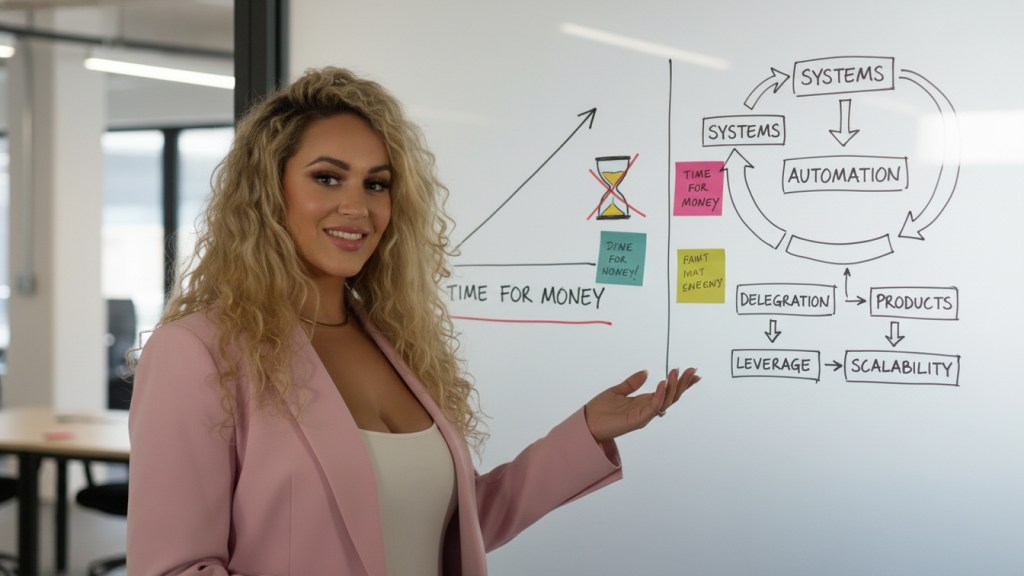
    I used to think scaling meant working more hours. It actually meant working completely differently.

    For years, I ran a nail studio. I was good at what I did, my clients loved me, and I was booked solid. But here’s the thing nobody tells you about being booked solid: your income has a ceiling. That ceiling is the number of hours you can physically work in a day.

    I remember the exact moment I realized something had to change. I was sitting in my studio between appointments. I was calculating how many clients I’d need to see that week. I needed to cover bills, childcare, everything. The math was brutal. Even if I worked every available hour, there was only so much I can earn. And as a single mother, “every available hour” was already stretching me thin.

    I looked at my schedule, completely full for the next three weeks, and felt exhausted instead of successful. That’s when it hit me: I had built a job, not a business.

    The Pivot Nobody Warns You About

    The decision to pivot from providing nail services to running an e-commerce nail supply business wasn’t some strategic masterstroke. It was necessity mixed with a bit of desperation and a lot of observation. I’d been ordering supplies for years. I knew what worked, what didn’t, what my clients actually needed versus what they thought they needed. That knowledge had value beyond the four walls of my studio.

    But knowing I needed to change and actually changing were two completely different things.

    The transition wasn’t clean. There was no moment where I closed the studio on Friday and opened an online store on Monday. It was messy. I was running appointments while building inventory systems on my laptop between clients. I was learning e-commerce platforms at midnight after my daughter went to bed. I was making mistakes, lots of them, and learning by doing because I couldn’t afford a course or a consultant.

    Here’s what nobody tells you about moving from trading time for money to building systems. It requires an entirely different skill set. You need to develop and improve new abilities. You have to learn it while still paying your bills with the old model.

    What Actually Changed (And I Mean Actually)

    Inventory replaced appointments. Instead of managing a calendar of client bookings, I started managing stock levels, reorder points, and supplier relationships. The shift sounds simple, but it required learning to think differently. With appointments, you know exactly what’s coming in. With inventory, you’re predicting demand. You’re managing cash flow differently. You deal with products that sit or will sell out overnight. I built my first inventory tracking system in a Google Sheet. It was basic, but it worked. I’ve since upgraded, but that first system taught me more than any tutorial ever.

    Systems replaced improvisation. In the studio, I improvise. A client showed up with damaged nails I wasn’t expecting? I’d figure it out in the moment. But e-commerce doesn’t allow for improvisation at scale. Every order needs to follow the same process. Every customer inquiry needs a systematic response. Every product needs consistent descriptions and categorization. I spent months building systems for order fulfillment, customer communication, and inventory management. Some of those systems I built wrong the first time and had to completely rebuild. That’s not failure, that’s how you learn what actually works versus what sounds good in theory.

    Automation replaced manual tasks. The first thing I automated was order confirmation emails. Sounds small, but it freed up hours every week. Then came automated reorder alerts when inventory hit certain levels. Then customer follow-up sequences. Each automation gave me back time I could reinvest in building the next system. I’m still automating things, by the way. It’s not a one-time project, it’s an ongoing evolution.

    Knowledge became the product. This is the part that took the longest to understand. In the studio, my skill served one client at a time. Now, that same knowledge about nail health, product quality, and proper technique helps hundreds of customers. It aids in product choice, descriptions, and the content I create. The knowledge I built over years of hands-on work didn’t disappear when I pivoted, it just scaled differently.

    The Part Nobody Posts About

    Let me be honest about what this transition actually looked like. If you’re considering a similar pivot, you need to know the real story. It’s important to understand the full picture, not just the highlight reel.

    It wasn’t an overnight switch. I ran both models for longer than I’d like to admit. Some weeks I made more from the studio, some weeks e-commerce pulled ahead. The stability came gradually, not suddenly.

    I learned by doing, not by copying some step-by-step blueprint. I’d love to tell you I bought a course and followed it perfectly, but that’s not what happened. I figured out what I needed to learn when I ran into problems. Then I found resources to solve those specific problems. This approach was messy. Nevertheless, it also meant I learned deeply because I was solving my actual issues. They were not theoretical ones.

    Some systems I built wrong the first time. My first inventory tracking system didn’t account for products with variations in size or color. My first customer communication system sent way too many emails. My original website navigation made sense to me but confused everyone else. I had to rebuild things. Multiple times. That’s normal, even though nobody talks about it.

    The emotional adjustment of letting go of direct client contact was harder than I expected. I loved my clients. I knew their names, their stories, what was happening in their lives. Moving to e-commerce meant serving more people but knowing them less personally. I had to find new ways to create connection, and I had to accept that the relationship dynamic was different. Not worse, just different.

    What This Actually Means For You

    You are still trading time for money. You feel that ceiling I felt. You already know something needs to change. The question isn’t whether to build systems, it’s which system to build first.

    Here’s what I learned: start with the setup that will save you the most time. Alternatively, tackle the setup that solves your biggest pain point. For me, that was inventory management because I was spending hours manually tracking stock. For you, it be scheduling, or client communication, or financial tracking, or content creation.

    Pick one. Build it imperfectly. Use it. Refine it. Then move to the next one.

    You don’t need to have it all figured out before you start. I certainly didn’t. You learn what you need to know when you need to know it. That’s not a weakness in your approach, that’s exactly how this works.

    The business I run now looks completely different from the one I ran five years ago. I work different hours, serve different people, use different skills. The foundation is the knowledge about nail health and what actually works. It came from all those hours in the studio working one-on-one with clients. Those years weren’t wasted, they were the education that makes everything I do now possible.

    Your current model isn’t a dead end. It’s the training ground for whatever comes next.

    So here’s my question for you: If you’re still trading time for money, consider what system you could build this quarter. Could it give you back even five hours a week? Start there. Build that. The next system will reveal itself once you’ve got the first one working.

    You don’t need to have the whole path mapped out. You just need to take the first step toward working differently instead of just working more.


    Michele Alexandria

    P.S. – If you build that first system, I’d love to hear what you chose and how it’s going. Reply to this email or DM me. I’m genuinely curious what systems matter most to people in different types of businesses.

  • From Trading Time for Money to Building Systems: What Actually Changed

    I used to think scaling meant working more hours. It actually meant working completely differently.

    For years, I ran a nail studio. I was good at what I did, my clients loved me, and I was booked solid. But here’s the thing nobody tells you about being booked solid: your income has a ceiling. That ceiling is the number of hours you can physically work in a day.

    I remember the exact moment I realized something had to change. I was sitting in my studio between appointments. I was calculating how many clients I’d need to see that week. I needed to cover bills, childcare, everything. The math was brutal. Even if I worked every available hour, there was only so much I can earn. And as a single mother, “every available hour” was already stretching me thin.

    I looked at my schedule, completely full for the next three weeks, and felt exhausted instead of successful. That’s when it hit me: I had built a job, not a business.

    The Pivot Nobody Warns You About

    The decision to pivot from providing nail services to running an e-commerce nail supply business wasn’t some strategic masterstroke. It was necessity mixed with a bit of desperation and a lot of observation. I’d been ordering supplies for years. I knew what worked, what didn’t, what my clients actually needed versus what they thought they needed. That knowledge had value beyond the four walls of my studio.

    But knowing I needed to change and actually changing were two completely different things.

    The transition wasn’t clean. There was no moment where I closed the studio on Friday and opened an online store on Monday. It was messy. I was running appointments while building inventory systems on my laptop between clients. I was learning e-commerce platforms at midnight after my daughter went to bed. I was making mistakes, lots of them, and learning by doing because I couldn’t afford a course or a consultant.

    Here’s what nobody tells you about moving from trading time for money to building systems. It requires an entirely different skill set. You need to develop and improve new abilities. You have to learn it while still paying your bills with the old model.

    What Actually Changed (And I Mean Actually)

    Inventory replaced appointments. Instead of managing a calendar of client bookings, I started managing stock levels, reorder points, and supplier relationships. The shift sounds simple, but it required learning to think differently. With appointments, you know exactly what’s coming in. With inventory, you’re predicting demand. You’re managing cash flow differently. You deal with products that sit or will sell out overnight. I built my first inventory tracking system in a Google Sheet. It was basic, but it worked. I’ve since upgraded, but that first system taught me more than any tutorial ever.

    Systems replaced improvisation. In the studio, I improvise. A client showed up with damaged nails I wasn’t expecting? I’d figure it out in the moment. But e-commerce doesn’t allow for improvisation at scale. Every order needs to follow the same process. Every customer inquiry needs a systematic response. Every product needs consistent descriptions and categorization. I spent months building systems for order fulfillment, customer communication, and inventory management. Some of those systems I built wrong the first time and had to completely rebuild. That’s not failure, that’s how you learn what actually works versus what sounds good in theory.

    Automation replaced manual tasks. The first thing I automated was order confirmation emails. Sounds small, but it freed up hours every week. Then came automated reorder alerts when inventory hit certain levels. Then customer follow-up sequences. Each automation gave me back time I could reinvest in building the next system. I’m still automating things, by the way. It’s not a one-time project, it’s an ongoing evolution.

    Knowledge became the product. This is the part that took the longest to understand. In the studio, my skill served one client at a time. Now, that same knowledge about nail health, product quality, and proper technique helps hundreds of customers. It aids in product choice, descriptions, and the content I create. The knowledge I built over years of hands-on work didn’t disappear when I pivoted, it just scaled differently.

    The Part Nobody Posts About

    Let me be honest about what this transition actually looked like. If you’re considering a similar pivot, you need to know the real story. It’s important to understand the full picture, not just the highlight reel.

    It wasn’t an overnight switch. I ran both models for longer than I’d like to admit. Some weeks I made more from the studio, some weeks e-commerce pulled ahead. The stability came gradually, not suddenly.

    I learned by doing, not by copying some step-by-step blueprint. I’d love to tell you I bought a course and followed it perfectly, but that’s not what happened. I figured out what I needed to learn when I ran into problems. Then I found resources to solve those specific problems. This approach was messy. Nevertheless, it also meant I learned deeply because I was solving my actual issues. They were not theoretical ones.

    Some systems I built wrong the first time. My first inventory tracking system didn’t account for products with variations in size or color. My first customer communication system sent way too many emails. My original website navigation made sense to me but confused everyone else. I had to rebuild things. Multiple times. That’s normal, even though nobody talks about it.

    The emotional adjustment of letting go of direct client contact was harder than I expected. I loved my clients. I knew their names, their stories, what was happening in their lives. Moving to e-commerce meant serving more people but knowing them less personally. I had to find new ways to create connection, and I had to accept that the relationship dynamic was different. Not worse, just different.

    What This Actually Means For You

    You are still trading time for money. You feel that ceiling I felt. You already know something needs to change. The question isn’t whether to build systems, it’s which system to build first.

    Here’s what I learned: start with the setup that will save you the most time. Alternatively, tackle the setup that solves your biggest pain point. For me, that was inventory management because I was spending hours manually tracking stock. For you, it be scheduling, or client communication, or financial tracking, or content creation.

    Pick one. Build it imperfectly. Use it. Refine it. Then move to the next one.

    You don’t need to have it all figured out before you start. I certainly didn’t. You learn what you need to know when you need to know it. That’s not a weakness in your approach, that’s exactly how this works.

    The business I run now looks completely different from the one I ran five years ago. I work different hours, serve different people, use different skills. The foundation is the knowledge about nail health and what actually works. It came from all those hours in the studio working one-on-one with clients. Those years weren’t wasted, they were the education that makes everything I do now possible.

    Your current model isn’t a dead end. It’s the training ground for whatever comes next.

    So here’s my question for you: If you’re still trading time for money, consider what system you could build this quarter. Could it give you back even five hours a week? Start there. Build that. The next system will reveal itself once you’ve got the first one working.

    You don’t need to have the whole path mapped out. You just need to take the first step toward working differently instead of just working more.


    Michele Alexandria

    P.S. – If you build that first system, I’d love to hear what you chose and how it’s going. Reply to this email or DM me. I’m genuinely curious what systems matter most to people in different types of businesses.

  • How I Batch Content Without Losing Authenticity

    How I Batch Content Without Losing Authenticity

    I’m learning to batch my content. It’s not because I have it all figured out. It’s because creating one piece at a time while trying to run a business wasn’t working.

    But here’s the thing that kept stopping me: I was scared batching would make me sound fake.

    Like I’d sit down, crank out five posts at once, and they’d all sound manufactured. Polished. Like someone trying to sound like an entrepreneur instead of just being one.

    I didn’t want to lose my voice in the process of trying to be more efficient. So I kept creating one piece at a time, whenever inspiration hit, which meant I barely posted at all.

    Then I realized: not posting out of fear of sounding fake is worse. Posting something that might not be perfect but is actually real is better.

    So I’m building a batching routine. And I’m figuring out how to stay authentic while doing it.

    The Fear That Kept Me From Batching

    Every time I considered creating multiple pieces of content at the same time, I imagined myself producing generic business advice. This advice could apply to anyone.

    “5 Tips for Entrepreneurs!” “How to Scale Your Business!” “Mindset Shifts That Changed Everything!”

    That’s not me. That’s not what I have to say. And I didn’t want to become that.

    I’ve built this business by doing every part of it myself. My skill comes from real experience. I have managed inventory and pivoted from services to products. I have rebuilt after setbacks. I have learned what actually works through trial and error.

    I was scared that batching content would change me. I didn’t want to sound like I’m reading from a script. I prefer to share what I actually lived through.

    So I didn’t batch. I waited for inspiration. And inspiration didn’t come often enough to keep me consistent.

    What Changed My Mind

    I had to be honest with myself: I was using “authenticity” as an excuse not to show up.

    Because here’s the truth—I know what I know. It doesn’t matter if I write about it on Monday. I can write five pieces on Monday that get published throughout the week.

    My experience running this business doesn’t change based on when I sit down to write about it.

    What I’ve learned about nail health, product quality, and inventory management is still real. My knowledge of building systems and pivoting strategies also remains valid. This is true whether I share it one piece at a time or batch it.

    The fear wasn’t about losing authenticity. The fear was about sitting down and actually doing the work of creating content consistently. It was not about waiting for the perfect moment when inspiration struck.

    How I’m Learning To Batch While Staying Real

    I’m building a routine now. It’s not perfect yet, but here’s what I’m figuring out:

    I sit down once or twice a week when I have mental space. Not when I’m burnt out or distracted, but when I can actually think clearly about what I want to say.

    I write about things I’m actually experiencing or problems I’m actually solving. Not hypothetical business advice, but real situations from running this business.

    What’s working in my inventory system right now. A mistake I made with a supplier and what I learned from it. A question a customer asked that made me realize I needed to explain something better.

    I write in my own voice. The same way I’d explain it if you were sitting across from me asking the question. No business jargon. No trying to sound more polished than I actually am.

    And I keep each piece focused on one thing. One problem, one lesson, one real experience. That keeps it from feeling generic or manufactured.

    What I’m Learning About My Voice

    My voice doesn’t disappear when I batch content. It disappears when I try to sound like someone I’m not.

    If I’m writing about something I actually know, it will sound like me. I discuss it the way I usually do. This is true whether I write it today or next Tuesday.

    The problem was never batching. The problem was thinking I had to sound a certain way. I felt pressured to be “professional” or “polished”. I was uncertain about what business content was supposed to sound like.

    But my audience isn’t looking for polished. They’re looking for real. They want to know how I actually manage inventory as a one-person operation. They want to know what it’s really like to pivot a business while being a single mother. They want the truth, not the highlight reel.

    I can provide them with what they need. It doesn’t matter whether I write one piece today or five pieces that get published over time.

    The System I’m Building

    I’m setting up WordPress to handle distribution. One piece of content, multiple platforms, without me manually posting everywhere.

    I’m learning to use AI to help with drafts sometimes, but I always rewrite in my own voice. Because AI can help me organize my thoughts, but it can’t replace what I actually know from lived experience.

    I’m creating a list of topics that originate from real situations. These include customer questions, problems I’m solving, and things I wish I’d known when I started. That way when I sit down to batch, I’m not starting from zero trying to think of something to say.

    And I’m learning to let go of perfect. Because perfect is what kept me from posting at all. And not posting at all meant nobody knew what I actually had to offer.

    What Batching Actually Gives Me

    Time to run my business. Time to build relationships with suppliers. Time to improve my systems. Time to be present with my kid.

    Instead of stopping multiple times a day to create content, I create once or twice a week. The rest of the time, I’m actually doing the work that grows the business.

    And honestly? My content is better this way.

    When I was trying to create every single day, I was forcing it. Trying to come up with something to say even when I didn’t have anything valuable to share. That’s when content starts sounding fake—when you’re creating just to create.

    Now I create when I have something real to say. And because I’m batching, I can be consistent without forcing it.

    The Balance I’m Still Figuring Out

    I’m learning to plan without over-planning. To be consistent without being rigid. To batch content without losing the spontaneity that keeps it real.

    Some weeks I’ll batch three pieces. Some weeks just one. It depends on what’s happening in the business and what’s actually on my mind.

    I’m not trying to fill a content calendar just to fill it. I want to share what I’m learning as I build this business. This process needs to be sustainable for me. It should also be valuable for the people who find my content.

    That means being disciplined about creating regularly. However, it also means being flexible. My content should reflect what’s actually happening, not what I planned three weeks ago.

    Where I Am Now

    I’m building this batching routine while staying true to how I actually communicate.

    I’m learning that authenticity isn’t about waiting for inspiration to strike. It’s about showing up consistently with what I actually know, in the way I actually talk about it.

    I’m figuring out how to be efficient without being manufactured. How to plan ahead without losing spontaneity. How to create multiple pieces without sounding like a content machine.

    And I’m learning that my voice doesn’t disappear when I batch. It disappears when I try to be someone I’m not.

    So I stay focused on what I actually know. I write the way I actually talk. I share real experiences, not theoretical advice.

    Whether I write it all on Monday or spread it out over the week doesn’t matter. What matters is that it’s real, it’s useful, and it’s actually me.

    That’s how I’m learning to batch content without losing authenticity. I am learning not by having it all figured out. Instead, I stay focused on what’s real and build the routine, even when it’s not perfect yet.


    Michele Alexandria — Building systems that let me show up consistently without losing what makes the content real. Learning as I go. Sharing the process, not just the results.

  • The Content Schedule That Doesn’t Require Daily Posting

    I barely post.

    There. I said it.

    Not because I have some perfect system figured out. Not because I’ve cracked the code on content strategy. But I got stuck in my own head. The algorithm kept changing faster than I could keep up. Then my body forced me to stop completely.

    I had a health scare. The kind forces you to scrutinize everything you’re doing. It makes you ask if any of it is worth its cost.

    That’s when I knew something had to change.

    The Algorithm Had Me Overthinking Everything

    Every time I sat down to create content, I’d freeze.

    Is this good enough? Does this sound stupid? Is this even what the algorithm wants today? What worked last month isn’t working this month. By the time I figure out what’s working now, it’ll change again.

    I’d write something, delete it, rewrite it, delete it again. I’d record a video and watch it back and think, “I sound ridiculous.” So I wouldn’t post it.

    I was more worried about looking foolish than I was about actually showing up.

    And the worst part? The algorithm kept changing. What they said would work didn’t work. What worked yesterday stopped working today. And I kept thinking, “Maybe my content just isn’t good enough.”

    So I stopped posting. Not because I made some strategic decision. Because I was paralyzed by self-doubt and exhausted from trying to keep up with something that kept moving the goalposts.

    Then My Body Made The Decision For Me

    I had a health scare.

    I’m not going to go into all the details. It was the wake-up call that makes you realize you can’t keep exhausting yourself. You shouldn’t try to build something that’s supposed to make your life better.

    I was so busy trying to figure out how to show up on social media “the right way.” I wasn’t taking care of myself. I wasn’t sleeping enough. I wasn’t eating properly. I was stressed all the time.

    And for what? For content that might or might not depending on what the algorithm decided that day?

    That’s when it clicked. I couldn’t keep doing this. My health mattered more than the algorithm. My kid needed me healthy. My business needed me functional.

    Something had to change. And that something was how I was approaching all of this.

    What I’m Building Now

    I’m not going to pretend I have this all figured out. I don’t. I’m in the middle of building it.

    But here’s what I know: I need a system. It shouldn’t need me to post every day just to stay visible. I need a way to create content that doesn’t leave me second-guessing every single word. I need automation that does the heavy lifting so I’m not manually posting to six different platforms.

    Right now, I spend my days building that system. Learning AI tools. Setting up automation. I am building out the backend of my content on WordPress. This way, when I do create something, it can reach multiple platforms. I won’t have to do it all manually.

    I’m learning to batch content. I sit down once or twice a week to create. This is instead of trying to show up every single day. I haven’t perfected it yet. But I’m building the routine.

    And I’m learning to let go of perfect. Because perfect kept me from posting at all. And not posting at all was worse than posting something that wasn’t perfect.

    The Real Shift I’m Making

    I’m choosing search over algorithm.

    Not because I’ve mastered SEO or because I have some brilliant content strategy. But because search doesn’t change every five minutes. Search is people looking for answers to real questions. And I actually know the answers.

    I know nail products. I know nail health. I know what works and what doesn’t because I’ve done every part of this business myself.

    When someone searches “why is my gel polish lifting,” I can answer that. When they search “how to store nail supplies properly,” I know that too.

    That content doesn’t need to be trendy. It doesn’t need to go viral. It just needs to be useful. And useful, I can do.

    The algorithm wanted me to do. Search just wants me to help. And helping is what I’ve been doing all along.

    What I’m Learning About Myself

    I’m self-conscious about putting myself out there. I overthink everything. I worry that I sound ridiculous or that my content isn’t good enough.

    But I’m learning that those fears kept me from building what I’m actually capable of building.

    I was so worried about looking perfect that I wasn’t showing up at all. And not showing up meant nobody knew what I had to offer. Nobody found my products. Nobody learned from what I actually know.

    The health scare forced me to ask: What’s worse? Posting something imperfect, or not posting at all because I’m too scared to look foolish?

    And the answer is clear. Not posting at all is worse.

    So I’m learning to build systems that make posting easier. That take some of the pressure off. That let me create when I have the mental space for it, not when the algorithm demands it.

    I’m learning to focus on content that helps people instead of content that performs. Because the algorithm will change again next month anyway. But people needing help with their nail products? That’s not going anywhere.

    Where I Actually Am Right Now

    I’m building. I’m learning. I’m putting together automation and systems that will let me create content without burning out again.

    I’m being disciplined about the backend work—setting up WordPress, learning the AI tools, building the structure. Even when I’m not posting publicly, I’m working on what will make posting sustainable.

    I’m practicing letting go of perfect. Posting things that aren’t polished because something posted is better than something perfect that never sees the light of day.

    And I’m protecting my health. Because none of this matters if I run myself into the ground trying to build it.

    This isn’t the story of someone who figured out the perfect content schedule. This is the story of someone who had to stop. She reassessed what was actually important. She then started rebuilding in a way that doesn’t cost her everything.

    I don’t post daily. I barely post at all right now. But I’m building something significant. It will allow me to show up consistently. I won’t have to sacrifice my health, my sanity, or my time with my kid.

    That’s the content schedule that actually works. Not because it’s perfect. But because it’s sustainable.

    And sustainable is what I need.


    Michele Alexandria — Rebuilding from the ground up after learning the hard way that hustle culture has real consequences. Learning in public. Figuring this out as I go.

  • Instagram vs. Seo for personal development: What’s actually working


    I’m building a personal development brand while running my nail supply business.

    Here’s the honest truth about what’s working and what’s not—real numbers, no inflation.

    What I’m investing in Instagram

    Time: 8-10 hours per week

    Writing captions about my journey. Creating quote graphics. Sharing behind-the-scenes of building as a single mom. Recording talking-head content about systems and mindset.

    Engaging with other founders. Responding to the few DMs I get. Commenting authentically on posts that resonate.

    It feels like I’m building something. I’m showing up. Creating. Being vulnerable. Doing what all the courses say to do.

    Results after 6 months:

    • 487 followers (yes, that’s the real number)
    • 2-4% average engagement
    • Maybe 20-30 website visitors per month from Instagram
    • A handful of genuine connections with other founders
    • Content disappears within 24 hours
    • Constant pressure to post or lose what little visibility I have

    I’m being honest: It’s slow. And sometimes discouraging.

    What I’m investing in SEO

    Time: 4-6 hours per week

    Writing about what I’ve actually lived. The pivot from services to e-commerce. Building as a single mom. Using AI to scale. The emotional reality of entrepreneurship.

    Real stories. Real struggles. Real lessons.

    It feels like nothing’s happening. I write a 2,000-word post about my journey and… silence. No likes. No comments. Just me and the publish button.

    Then I check my analytics.

    Results after 6 months:

    • Ranking for personal development and entrepreneur keywords
    • ~600 website visitors per month from search (and growing)
    • People finding me who’ve never heard of me before
    • Content from 3 months ago still bringing new people every day
    • Email subscribers coming from blog posts, not Instagram
    • Work I did once keeps working

    The difference I’m experiencing

    Instagram feels active. SEO feels invisible.

    Instagram gives me instant feedback. A like. A comment. A share. It validates that I’m doing something.

    SEO is quiet. I pour my story into a blog post and hear nothing back. For weeks.

    Then someone emails me. They say, “I found your post about rebuilding after losing everything. It’s exactly what I needed to hear.”

    Different feedback loops. Both matter. But one compounds.

    Why Instagram is still worth it (even with 487 followers)

    Here’s what I had to shift in my thinking: Instagram isn’t about the numbers right now. It’s about building in public and finding my people.

    What Instagram is actually doing:

    Building genuine connections with other founders

    The 487 people following me? Some are just lurkers. But about 50 of them actually engage. They DM me real questions. Share their struggles. We have actual conversations.

    Those relationships matter more than thousands of passive followers.

    Forcing me to clarify my message

    When I need to distill a complex idea into a carousel or caption, I gain clarity. I understand better what I’m actually trying to say.

    That clarity improves my blog writing, my email content, everything.

    Creating accountability for my journey

    When I share what I’m building, I’m more committed to actually building it. The audience holds me accountable. It’s not in a pressure way. It’s more in a “I said I was doing this, so I should do it” way.

    Testing ideas before I write full blog posts

    I can share a concept on Instagram and see if it resonates. If people engage, that tells me it’s worth expanding into a full blog post.

    Instagram is my testing ground. SEO is where I build the asset.

    Why SEO is my primary focus (even though it’s slower)

    SEO finds people who need exactly what I’m writing about.

    Someone searching “how to rebuild your business after failure” is actively looking for that help right now.

    Someone scrolling Instagram past my post about rebuilding? They might pause for a second, double-tap, keep scrolling.

    Different intent. Different outcome.

    What SEO is actually doing:

    Bringing in people who don’t know me yet

    Instagram grows through people who already know someone in my network. SEO brings in total strangers who found me because I answered their exact question.

    That’s how I reach beyond my immediate circle.

    Creating evergreen content that works for years

    That post I wrote about the identity crisis of scaling? Still bringing people to my site 4 months later. Will probably still work 4 years from now.

    My Instagram post about the same thing? Gone within 48 hours.

    Building actual authority on search engines

    When someone searches for topics I write about, I’m starting to show up. That positions me as someone with credibility, not just another person sharing quotes.

    Generating email subscribers who actually engaged with my content first

    People who find me through SEO have already read a full blog post. They’ve engaged with my story. When they subscribe, they’re warm leads, not cold followers.

    The honest struggle with both

    Instagram:

    Some weeks I get good engagement. Some weeks it feels like I’m posting into a void.

    The algorithm is unpredictable. What works one week doesn’t work the next.

    I compare myself to people with thousands of followers and feel behind.

    But I’m learning to measure different things: Quality of connection over quantity of followers. Depth of conversation over vanity metrics.

    SEO:

    The delayed gratification is hard. I can write for weeks and see no movement.

    Some posts rank quickly. Others sit on page 3 of Google for months.

    I question if I’m doing it right because there’s no immediate feedback.

    But I’m learning to trust the process: Every post is an asset. Every piece of content compounds. The work isn’t wasted even when I can’t see results yet.

    My actual strategy (the real one)

    I’m not pretending I have this figured out. I’m figuring it out as I go.

    SEO gets 60% of my content time:

    Why: It compounds. It reaches new people. It builds authority that lasts.

    What I do: Write 1-2 in-depth blog posts per month based on what I’ve actually lived. The pivot. The rebuild. Building as a single mom. Using systems and AI. The emotional reality nobody talks about.

    How I measure success: Website traffic growth, time on page, email signups from blog posts.

    Instagram gets 40% of my content time:

    Why: It builds relationships. It keeps me accountable. It’s where I connect with other founders in real-time.

    What I do: 2-3 posts per week (batched on Sundays), genuine engagement when I have energy, real conversations in DMs.

    How I measure success: Quality of conversations, depth of connection, ideas validated before I write full posts.

    How they work together in my actual experience

    Instagram introduces people to my perspective. They see my posts about building in public, resonate with the message, want to know more.

    SEO gives them the full story. They search for topics I write about, find my blog, read 2,000 words about my real journey, subscribe.

    Or:

    SEO brings people who need what I teach. They find my blog through search, read about systems or pivoting or single mom entrepreneurship.

    Instagram shows them I’m still actively building. They follow to stay connected, see updates, engage with ongoing content.

    They support each other. But SEO is the foundation.

    What I’m actually building with both

    Not next. A body of work.

    Every blog post is a piece of my story. Every Instagram post tests and refines my message.

    I’m not trying to go viral. I’m trying to help people who are where I was.

    Instagram lets me do that in real-time, in conversation.

    SEO lets me do that at scale, for people I’ll never directly meet.

    Both matter. Both serve the mission.

    The honest reality as a single mom building this

    I have maybe 20-25 hours a week to work. Between my nail supply business and building this personal development brand.

    I can’t spend 10 hours a week on Instagram hoping for growth.

    I need my time to compound. To build assets. To create things that work when I’m not working.

    That’s why SEO is my foundation.

    But I also need connection. Community. Real conversations with people on similar paths.

    That’s why I’m still building Instagram.

    I’m just not measuring it the same way. Not chasing follower counts. Not stressing about virality.

    I’m building relationships. Testing ideas. Staying connected.

    And when I’m ready to scale this personal development brand fully, I’ll have both:

    • A library of SEO content that ranks and converts
    • A community on Instagram that knows me, trusts me, and engages authentically

    Different purposes. Both intentional.

    What I want you to know if you’re building too

    You don’t need thousands of followers to build something real.

    My 487 Instagram followers include people who actually care about what I’m building. That’s more valuable than 10,000 passive followers.

    You don’t need to choose between platforms.

    Use each for what it’s actually good at. Instagram for connection. SEO for reach and authority.

    You don’t need to do it perfectly.

    I’m figuring this out as I go. Some weeks I’m consistent. Some weeks I barely post. The work still compounds.

    You just need to keep building.

    Write the blog posts. Share the Instagram content. Have the real conversations. Do the work even when you can’t see the results yet.

    It’s building. Even when it doesn’t feel like it.

    Michele Alexandria

    P.S. — If you’re building a personal development brand, you may struggle with where to focus your limited time. I’m documenting everything I’m learning about balancing SEO and Instagram. I’ll share what’s actually working. I’ll also share what I’m letting go of. Reply “BUILDING” and let’s talk about it.


    Are you building on Instagram, SEO, or both? What’s your honest experience so far? Reply and tell me—I’d love to hear where you’re at in your journey.