Read the posts. Watch the videos. Listen to the podcasts.
I thought I was getting the real information. The strategies. The playbooks.
But then I started getting into actual rooms with founders who are building at scale.
Not talking about what they did. Actively doing it.
And I realized—the conversations in those rooms sound nothing like the content online.
What Online Content Sounds Like vs. What Real Conversations Sound Like
Online: “Here’s the 5-step framework I used to scale to 7 figures.”
In the room: “I’m trying to figure out how to price this offer so it converts. I want it to work without requiring me to be on every sales call. What’s working for you?”
Online: “Here’s what I learned from my biggest failure.”
In the room: “I tested this last week and it completely flopped. I’m not sure if it’s the messaging or the timing. What would you try next?”
Online: Everything’s past tense. Packaged. Polished into something shareable.
In the room: Everything’s current tense. Messy. Happening in real time.
And that’s the difference that matters.
What People Are Actually Talking About
1. The specific problem they’re solving right now
Not abstract strategy. Not frameworks.
Real, tactical problems:
“I need to automate customer onboarding but I’m not sure which part to automate first.”
“I’m hitting a bottleneck in fulfillment. Do I hire or do I rebuild this system?”
“My traffic’s up but conversions are flat. What am I missing?”
And then everyone jumps in. Not with a framework. With what they’ve actually tested.
“I automated the welcome sequence first because that was eating the most time.”
“I rebuilt the setup first. Hiring into a broken process just creates more chaos.”
“Check your product page load time. Mine was slow and I didn’t realize it was killing conversions.”
It’s not teaching. It’s problem-solving together.
2. The trade-offs no one posts about
In these rooms, people talk openly about the decisions that don’t have clean answers.
“I hire for this role, but then I’m locked into this revenue level for at least 6 months. I’m not sure I’m ready for that pressure.”
“I automate this process, but it means giving up control. And I don’t know if I trust the network yet.”
“I scale this offer, but it would mean stepping away from the part of the business I actually enjoy. Is that worth it?”
These are the conversations that don’t make it into the highlight reel. Because they’re not inspirational. They’re just honest.
3. What’s not working
People admit what failed. Without the neat lesson attached.
“I launched this product last week. Thought it would be a hit. Crickets. I have no idea why.”
“I’ve been trying to crack this traffic channel for two months. Nothing’s working. I’m about to move on but I don’t know if I’m quitting too early.”
No one’s pretending to have it all figured out.
And that’s the most valuable part. Because it reminds you that everyone’s making it up as they go. They’re just doing it while building.
4. The weight of it
This surprised me the most.
People talk about the emotional cost. The pressure. The isolation.
“I haven’t taken a real day off in 9 months. I don’t know how to stop without everything falling apart.”
“Everyone thinks I’ve made it because revenue’s good. But I feel like I’m barely holding it together.”
“I’m the only one who knows how anything works in my business. And that terrifies me.”
You don’t see this in the LinkedIn posts. But it’s the reality when you’re scaling as a solo founder or small team.
And hearing that others feel it too? That matters more than any strategy.
The Questions People Ask
The questions in these rooms aren’t vague.
Not “How do I grow my business?”
But:
“What’s your CAC on that channel?” “How did you structure that offer so it’s actually scalable?” “What tool are you using for that specific workflow?” “When did you decide to hire vs. automate?” “What metrics do you actually look at every day?”
These aren’t questions you can Google. Because the answers depend on context—what stage you’re at, what you’re optimizing for, what resources you have.
And the value isn’t just the answer. It’s hearing how someone else thinks through the problem.
What I’m Learning by Being in These Rooms
1. Everyone’s testing constantly
No one’s sitting on ideas waiting for the perfect plan.
“I threw this up last week to see if it would convert. It’s at 11%, so I’m keeping it.”
“I tried three different pricing structures in two weeks. This one stuck.”
They’re not agonizing. They’re moving, getting data, adjusting.
That’s what building at scale actually looks like.
2. Systems aren’t optional
Every person in these rooms has systems. Not because they’re type-A perfectionists. Because they hit a wall where they couldn’t grow without them.
And the conversations are specific:
“Walk me through your fulfillment process.” “How do you handle customer service without it eating all your time?” “What’s your onboarding flow look like?”
It’s operational. Practical. Detailed.
Because that’s what actually lets a business scale.
3. Mindset shifts happen through proximity
I’m noticing my own thinking change just by being around people who think differently.
They don’t ask “Can I do this?” They ask “What’s the fastest way to test if this works?”
They don’t worry about looking like they have it together. They focus on moving ahead.
They don’t see failure as a reflection of their worth. They see it as data.
And the more I’m in these conversations, the more I default to thinking that way too.
Why This Matters More Than Content
Content teaches you what worked for someone else in the past.
These rooms teach you how to think through what will work for you right now.
Content is polished and packaged.
These conversations are messy and real.
Content makes you feel like you should have it figured out by now.
These rooms remind you that no one has it fully figured out. They’re just building anyway.
What Changed for Me
I stopped spending hours consuming content about how to scale.
And started getting into rooms with people who are actively scaling.
Not people who scaled once and now teach it. People who are in the middle of it. Right now. Figuring it out as they build.
That’s what the cohort programs I’ve joined gave me. Not just frameworks. Access.
To the conversations that only happen when you’re in the room with people building at your level or beyond.
And that access has taught me more in six months than years of content consumption ever did.
The Shift
I’m not just learning strategies anymore.
I’m learning how to think like someone who’s building at scale.
How to move faster. How to trust systems I build. How to make decisions without full information. How to handle the pressure that comes with growth.
And I’m realizing—this is what I needed all along.
Not more content. More proximity.
To people who are doing the thing I’m trying to do. In real time. With real problems. And real solutions they’re testing right now.
— Michele Alexandria
Are you learning from content or from people actively building? What changed when you got into rooms with founders ahead of you?
Subscribe to my newsletter for insights from inside these rooms. Discover the real conversations that happen when you’re building and scaling in real time.
I used to think having a strategy meant I was ahead of the game.
I’d map out my approach. Write down the plan. Know exactly what needed to happen to grow the business.
And then I’d look at that strategy and think: “Great. Now I just need to execute it.”
But here’s what I learned the hard way:
Having a strategy and implementing a strategy are two completely different things.
And most people—myself included—get stuck in the gap between the two.
What Having a Strategy Looks Like
A strategy is clean. Logical. It makes sense on paper.
“I need to drive more traffic to my e-commerce site. So I’ll focus on SEO and content marketing.”
There. That’s a strategy.
Or: “I need to automate order processing so I’m not manually handling every deal. So, I’ll implement this system.”
Strategy complete.
The problem? None of that is implementation. It’s just intention.
And intention without execution is just a fancy to-do list that never gets done.
The Gap I Kept Getting Stuck In
For years, I had strategies.
I knew I needed to scale the e-commerce side. I knew I needed to step away from being in every single operation. I knew I needed better systems.
I’d write it all down. Feel good about having clarity. Feel like I was being strategic.
And then… nothing would change.
You know what you need to do. Yet, actually doing it involves a hundred small decisions and unexpected obstacles. These challenges were not accounted for when you wrote the strategy.
The strategy says: Automate order processing.
Implementation asks: Which tool? How do I set it up? What happens when it breaks? How do I handle exceptions? Do I test it first or switch everything over at once?
The strategy says: Drive traffic through content.
Implementation asks: What content? How often? Where do I post it? How do I know if it’s working? When do I adjust?
Strategy is the what. Implementation is the how, when, and what happens when things don’t go according to plan.
And that gap is where most strategies die.
What Changed After Scale Up
During that program last summer, I was surrounded by founders who weren’t just talking about their strategies. They were actually implementing them.
And I started paying attention to how they did it.
They weren’t waiting for perfect conditions. They weren’t mapping out every possible scenario before they started.
They were breaking the strategy down into the smallest possible first step. And then taking that step instantly.
Not next week. Not after they figured out all the details.
Immediately.
That’s when I realized: implementation isn’t about having the perfect plan. It’s about knowing what to do next and doing it before you talk yourself out of it.
What Implementation Actually Requires
Implementation requires things strategy doesn’t:
1. Breaking it down into specific, small actions
Strategy: “Build automation for order processing.” Implementation: “Today, I’m going to research three automation tools. Tomorrow, I’ll pick one and watch the setup tutorial. Next day, I’ll automate one specific step—order confirmations.”
You can’t implement “build automation.” You can implement “watch this tutorial” and “set up this one workflow.”
2. Starting before you feel ready
Strategy feels safe because you can plan it perfectly. Implementation is uncomfortable because you’re working with incomplete information.
I didn’t wait until I understood every feature of the AI tools I was learning. I picked one task that was eating up my time—inventory tracking—and figured out how to automate just that one thing.
Then I moved to the next thing.
3. Adjusting as you go
Strategy assumes things will go according to plan. Implementation is constantly adjusting because things never go according to plan.
When I built my first automation, it broke within 48 hours. Old me would’ve seen that as failure. New me just fixed it and kept going.
That’s implementation. You don’t stop when something doesn’t work. You adjust and keep moving.
What This Looked Like in My Business
When I decided to pivot fully to e-commerce and step away from the studio, I had a strategy:
Focus on the business that scales. Build systems that don’t need my physical presence. Drive traffic. Increase conversions.
Clean. Clear. Strategic.
But implementation looked like this:
Week 1: I picked one bottleneck—manual order processing—and researched automation tools. Picked one. Set it up for order confirmations only.
Week 2: The automation broke. I fixed it. Added another step—inventory alerts.
Week 3: Tested a traffic source. Didn’t work. Moved to the next one.
Week 4: Built a simple email sequence for abandoned carts. Converted at 8%. Kept it.
None of that was in the original strategy. Because strategy doesn’t account for the messiness of actually doing the work.
Implementation is iterative. Strategy is linear.
And you can’t scale a business on a linear plan when reality is messy and constantly changing.
The Real Difference
Having a strategy makes you feel productive.
Implementing a strategy makes you actually move ahead.
Strategy: I know what I need to do. Implementation: I’m doing it right now.
Strategy: I have a plan to scale. Implementation: I tested this, it worked, I’m scaling it.
Strategy: I understand the problem. Implementation: I built a solution and it’s running.
The gap between the two is action. And action is the only thing that changes your business.
Where Most People Get Stuck
People get stuck because they think they need a better strategy.
They keep refining the plan. Reading more. Researching more. Waiting for the perfect approach.
But the problem isn’t the strategy. It’s that they’re not implementing the one they already have.
I’ve had the same strategy for months: scale e-commerce, build systems, drive traffic, increase conversions.
What’s changed isn’t my strategy. It’s that I’m actually implementing it now.
Every single day.
Not perfectly. But consistently.
And that’s what moves the business forward.
What I Do Differently Now
I don’t spend weeks refining strategy anymore.
I spend 10 minutes clarifying what needs to happen. Then I spend the rest of my time implementing it.
Strategy session: 10 minutes. What’s the next bottleneck? What’s one thing I can do about it this week?
Implementation: Everything else. Building it. Testing it. Adjusting it. Moving.
Because I’ve learned the hard way:
A mediocre strategy that’s implemented beats a perfect strategy that stays on paper.
Every single time.
Where I Am Now
I still have strategy. I still plan.
But I don’t confuse planning with progress anymore.
Progress is implementation. It’s the messy, iterative, imperfect work of actually building what the strategy says you should build.
And as a single mother with no safety net, I can’t afford to stay in strategy mode.
I need results. And results only come from implementation.
So that’s where I live now. Not in the planning. In the doing.
— Michele Alexandria
Do you have strategies you’re not implementing? What’s actually stopping you—the plan or the action?
Subscribe to my newsletter for more insights on moving from strategy to execution. Real talk from someone who’s building and implementing in real time.
I used to spend hours thinking through every possibility before I made a move.
What if I changed this traffic approach? What if I repositioned the products this way? What if I built the structure differently?
I’d map it all out. Think through the scenarios. Try to plan for every outcome.
And then I’d sit on it. Because what if it didn’t work? What if I wasted money? What if there was something I was missing?
I was stuck in planning mode. Telling myself I was being strategic.
But after that Scale Up program last summer, something clicked.
I stopped planning everything to death. And started testing.
What All That “Planning” Really Was
Let me be honest about what I was actually doing:
I was scared to be wrong. So I kept thinking instead of doing.
I’d tell myself I was being careful. Thorough. Making sure I had all the information before I committed.
But really, I was avoiding taking the step to put something out there. I hesitated to see if it worked.
Because as long as it stayed in my head, it was still perfect. The second I executed; I’d get real feedback. And that feedback be this isn’t working.
So I stayed in idea mode. Where everything felt safer.
And meanwhile, nothing was moving. I was busy, but I wasn’t building anything.
The Shift That Changed How I Work
During Scale Up, I was in a room with other founders who were actually scaling.
And I noticed something: they weren’t planning for months before testing something. They were testing constantly.
One founder said something that stuck with me: “I don’t spend weeks planning anymore. I just build the simplest version, put it out, and adjust based on what actually happens.”
And I realized—I’d been doing it backwards.
I was trying to perfect something before I even knew if it would work.
Spending weeks thinking through scenarios that not even matter once I got real data.
That’s when I understood: having a strategy isn’t about having the perfect plan. It’s about knowing what to test next and actually testing it.
What Execution Looks Like Now
Execution isn’t reckless. It’s just faster.
Before: I’d spend weeks researching the best way to drive traffic before trying anything. Now: I pick one approach, run it for two weeks, look at what happened, then adjust or try something else.
Before: I’d try to design the perfect automation system on paper before building it. Now: I build the simplest version that solves the immediate problem. Then I improve it as I learn what’s actually slowing me down.
Before: I’d analyze every angle before deciding how to position a product. Now: I test a few approaches, see what people actually respond to, and go with that.
The difference is speed to feedback.
When you’re planning, you’re guessing. When you’re executing, you’re learning from real results.
What This Actually Looked Like in My Business
When I stepped away from the studio work last year and went all-in on e-commerce, I had a choice.
I spend months planning the perfect approach. Mapping out every system. Researching every traffic channel. Building the ideal workflow.
Or I just start.
I chose to start.
Traffic: I didn’t research every possible channel. I picked the one that made sense for my audience and ran a test. If it worked after two weeks, I’d scale it. If it didn’t, I’d move on.
Automation: I didn’t map out the perfect order processing workflow. I built the simplest automation that handled the most time-consuming step. Then I added to it when I found the next bottleneck.
Product positioning: I didn’t overthink the messaging. I tried three different ways of talking about my products in my content. The one that got responses became my positioning. The others got dropped.
None of it was perfect. But all of it moved the business ahead.
And that’s what matters.
The Question That Changed
The biggest shift isn’t what I do. It’s what I ask myself before I do it.
Before: “What if this doesn’t work?” Now: “How quickly can I find out if this works?”
Before: “What if I’m missing something important?” Now: “What’s the smallest test I can run to see if this is worth pursuing?”
Before: “I need to think this through more.” Now: “I need real data, and the only way to get it is to try.”
I still think strategically. But strategy without execution is just expensive overthinking.
The Hard Part About This
Execution requires something planning doesn’t: being okay with being wrong.
When you’re in planning mode, everything stays perfect. Because it’s all hypothetical.
The second you execute, you get real feedback. And sometimes that feedback is brutal.
I tested a traffic approach last month that I was sure would move the needle. It didn’t. The conversion rate was terrible and I wasted time on it.
Old me would’ve seen that as proof I should’ve planned more.
New me sees it differently. I got a clear answer in two weeks. I avoided spending two months planning something that still wouldn’t have worked.
That’s the trade-off. You move faster, but you’re wrong more often.
And you have to be okay with that.
The Mindset Shift That Changed Everything
Here’s what shifted for me:
I stopped seeing failed tests as wasted effort.
I started seeing them as information.
When something doesn’t work, I’m not starting over. I’m eliminating a path that doesn’t go where I need to go.
That’s just as valuable as finding the path that does work.
Every test—whether it succeeds or fails—gets me closer to what actually scales.
But only if I’m actually testing. Not just thinking about testing.
Where I Am Now
I don’t sit with ideas for weeks anymore.
I don’t wait until I feel completely ready or until I’ve thought through every scenario.
I test. I build. I adjust. I move.
Some things work. Some things don’t. But I’m learning from real data instead of theoretical planning.
And my business is growing because of it.
Not because I have perfect strategy. But because I’m executing fast enough to figure out what works.
That’s the shift.
From brainstorming what work to testing what actually does.
And as a single mother with no safety net, I can’t afford to stay in planning mode forever.
I need to move. Learn. Adjust. Build.
And that’s exactly what I’m doing.
— Michele Alexandria
Have you made this shift—from planning everything to just testing and adjusting? What finally pushed you to start executing?
Subscribe to my newsletter for more insights on moving from ideas to implementation. Real strategies from someone building and learning in real time.
Last summer, I finished a 12-week program called Scale Up.
And somewhere in those 12 weeks, something shifted in how I thought about my business.
I stopped thinking like the person who has to do everything.
And started thinking like the person who builds the systems that do it.
I didn’t expect it. But once I saw it, I couldn’t go back.
What My Days Used to Look Like
For years, my default was: “I have to do this.”
Client booking comes in? I have to confirm it. Order placed? I have to process it. Inventory’s low? I have to reorder. Customer has a question? I have to answer. Something breaks? I have to fix it.
Every single thing that needed to happen in my business went through me first.
I was in the studio all day servicing clients. Then I’d come home and get my daughter to bed. Afterward, I’d switch over to the e-commerce side. This included processing orders, managing inventory, and answering emails. I was also building whatever system I was learning that week.
I learned my businesses by being in every part of them. By doing the work myself until I understood how it all fit together.
And for a long time, that’s exactly what I needed to do.
You can’t build systems for work you don’t understand. You can’t hand off what you haven’t done yourself.
But at some point, what got me here started keeping me stuck.
Because when you’re the center of everything, the business can’t grow past what you can personally handle.
And I was already maxed out.
The Exercise That Changed How I See My Business
During that program last summer, we mapped out our entire businesses.
Every process. Every task. Every decision point. Every place where you’re personally involved.
Then we had to ask: Where am I the bottleneck?
When I looked at my map, the answer was brutal.
I was the bottleneck everywhere.
Not because those tasks required my specific skill or judgment. But because I’d always been the one doing them, so I kept doing them.
And that’s when something clicked.
The question isn’t “What do I need to do today?”
The question is “What needs to get done, and does it actually need me?”
That shift—from me needing to do it to it just needing to get done—changed everything.
What Changed in How I Work
I’m not doing less. I’m doing different.
Before: I’d manually process every order as it came in. Now: I built automation that processes orders without me touching them.
Before: I’d answer the same customer questions over and over. Now: I created an FAQ system and email templates so 80% of questions get answered without me.
Before: I made every single decision. This included even the small ones. I was the only one who knew how things worked. Now: I’m documenting decision frameworks so the business can keep moving when I’m not available.
Before: I spent my days executing—doing the tasks that kept things running. Now: I’m focused on strategy—what drives traffic, what converts, what actually scales.
The work isn’t easier. It’s just leveraged.
And that’s the difference between being an operator and being a CEO.
The Bigger Shift: Stepping Away From the Studio
The biggest change came after that program ended.
I realized I didn’t just need to think differently. I needed to work differently.
So I made a decision I’d been avoiding: I stepped away from the studio work entirely.
The work that required me to physically show up. The appointments. The in-person services. The thing I’d built my business on for years.
It was steady income. It was what people knew me for. And walking away from it was terrifying.
But I couldn’t scale a business that required my body to be in the room.
So, I pivoted. Fully into the e-commerce side. The part that grows without me being tied to a location or a schedule.
The part where I build systems was exciting. I implement AI tools I’d been learning. It allowed me to create something that didn’t need me in every deal.
That’s the shift. Not just thinking like a CEO. But actually building like one.
The Identity Piece I’m Still Working Through
Here’s what nobody tells you about this transition:
It messes with your sense of self.
I built my entire identity around being the operator who does it all.
The woman who learned by doing. Who serviced clients herself. Who managed inventory late at night after her daughter went to bed. Who figured out systems because there was no one else to build them.
That version of me got me here. And I’m proud of her.
But she’s also the version who hit a ceiling. Who couldn’t grow because she was doing everything. Who was exhausted and maxed out with no path ahead.
So I’m learning to become someone else. Someone who builds instead of just executes. Someone who focuses on leverage instead of just effort.
And some days, I don’t recognize myself.
I’m in rooms with founders who are years ahead of me. I’m implementing strategies I never would’ve tried before. I’m making decisions as the CEO of a scaling business instead of the operator keeping things afloat.
I’m not the underdog fighting to survive anymore.
And I’m still figuring out who I am now that I’m not her.
What This Actually Looks Like Right Now
That shift happened last summer. But I’m still living in it every single day.
Some days I get it right. I focus on building. I trust the systems I’ve created. I protect my time for strategic work.
Other days I slip back. I try to control everything. I make myself the bottleneck again because it feels safer than letting go.
But the direction is clear.
I’m not going back to being the operator who has to do everything.
I’m building a business that can run without me being in the middle of it.
Not because I want to step away. But because that’s the only way it scales.
And as a single mother building this with no safety net, scaling isn’t optional. It’s the whole point.
The One Thing That Changed Everything
You don’t scale by working harder. You scale by thinking differently.
Not “What do I have to do?”
But “What needs to get done, and how do I build it so it doesn’t need me?”
That’s the shift.
From operator to CEO. From doing to building. From surviving to scaling.
And I’m still in the middle of learning what that means.
— Michele Alexandria
Have you made this shift—from being in everything to building systems that run without you? What changed for you?
Subscribe to my newsletter for honest insights on scaling, strategic pivots, and the identity work that comes with growth. Real talk from someone building in real time.
Why Your Morning Routine Isn’t the Problem (The Real Bottleneck)
I used to think if I just start my day right, everything else would fall into place.
Wake up earlier. Get ahead of the chaos. Be intentional before the day took over.
So, I’d set my alarm for 5:30am. Make coffee. Try to sit with my journal before my daughter woke up.
And then I’d spend the entire day drowning anyway.
Because the problem was never my morning. The problem was that I’d built a business that couldn’t run without me being in the middle of everything.
What My Days Actually Looked Like
I’d be in the studio all day. Back-to-back clients. Managing schedules. Handling the in-person work that required me to physically show up.
Then I’d come home, get my daughter to bed, and switch over to the e-commerce side. Processing orders. Answering customer emails. Managing inventory. Building systems at 11pm because that was the only quiet time I had.
And somewhere in there, I was supposed to create content. Post on social media. “Build my brand.” Stay visible.
I was working 12-hour days. Every single day.
And my business still wasn’t growing the way I needed it to.
Not because I wasn’t working hard enough. But because I was the bottleneck in my own operations.
The Moment I Realized What Was Actually Wrong
I was sitting in my car after a full day in the studio, about to drive home and start the second shift of work, and I thought:
“If I got sick tomorrow, this entire business would stop.”
Not slow down. Stop.
Because I was the one who confirmed every booking. Responded to every client question. Processed every order. Made every decision, no matter how small.
I’d built a business where nothing happens without me.
And that’s when I realized: my morning routine wasn’t the problem.
The fact that I had to be in everything was the problem.
What I Started Doing Differently
I didn’t change my wake-up time. I changed where my time was going.
I mapped out what was actually taking up my days
I made a list of everything I was doing in a week. Every task. Every decision. Every thing that required my attention.
Then I asked myself: Does this actually need me? Or am I just doing it because I’ve always done it?
Turns out, most of what I was doing didn’t need me specifically. It just needed to be done. And I was doing it because I didn’t have a system in place to handle it without me.
I started building systems that could run without me
This is when I really leaned into automation and AI tools. Not because I wanted to be “cutting edge,” but because I was exhausted.
I automated client booking confirmations. Set up inventory alerts. Built follow-up sequences for customers.
Not all at once. Just one thing at a time. Whatever was eating up the most hours that week.
And slowly, I started getting time back.
I stopped making the same decisions repeatedly
I realized I was answering the same questions over and over. Making the same choices every time a situation came up.
“How do I respond when a client asks about rescheduling?” “What’s my policy on returns?” “What do I do when inventory runs low?”
So I created frameworks. Documented my processes. Built templates.
It wasn’t because I wanted everything to be robotic. It was because I couldn’t keep spending mental energy on things I’d already figured out.
I protected the hours that actually moved things ahead
Here’s what I had to admit to myself:
I was spending most of my day on things that kept the business running, but didn’t actually grow it.
Emails. Admin work. Responding to every notification. “Engaging” on social media.
We spend barely any time on the work that would actually scale things. This includes building out the e-commerce side, creating systems, and focusing on strategy.
So I started blocking time for revenue-generating work first. And fitting everything else around it.
Not perfectly. But intentionally.
What Actually Changed
It wasn’t that I became more disciplined or productive.
It was that I stopped being the center of every single operation.
I built systems so things happen without me. I automated what didn’t need my judgment. I created frameworks so I wasn’t starting from scratch every time.
And slowly, my business started to feel less like a trap and more like something that actually grow.
Not because I woke up earlier.
But because I stopped being the reason nothing can move without me.
The Real Bottleneck
If you feel like you’re working all the time but not getting anywhere, it’s probably not your morning routine.
It’s probably that you’re in the middle of everything. And your business can’t grow past you because you haven’t built the systems that let it run without you.
That’s not a time management problem. That’s a business design problem.
And no amount of journaling at 5am is going to fix it.
What I Wish Someone Had Told Me
You don’t need to improve your mornings. You need to find where you’re the bottleneck.
Where does everything stop if you’re not there? What are you doing that can be systematized? What decisions are you making over and over that be turned into a process?
That’s the work that actually frees you up.
Not waking up earlier. But building a business that doesn’t need you in every single thing.
— Michele Alexandria
What’s the real thing keeping you stuck? Not your habits the actual bottleneck in your business. I’d love to hear it. Drop a comment.
Subscribe to my newsletter for practical insights on building systems, scaling intentionally, and removing yourself as the bottleneck. Real strategies from someone who learned by doing.
Just another potential client for the studio. The call I’ve done hundreds of times over the years.
But twenty minutes in, something broke inside me.
And I realized I didn’t want to say yes.
What Happened
She was great. Excited. Ready to book.
She was asking all the right questions—about my process, my availability, what working together would look like.
And I was giving her all the answers. Walking through the services. Explaining how I handle everything myself. Showing her why clients choose to work with me.
But the whole time, I felt like I was reading from a script I’d written years ago.
A script for a version of myself I’m not sure I am anymore.
And then she said it:
“I love that you’re so hands-on with everything. That you’ll be there personally for every step. That’s exactly what I need.”
And something in me just… cracked.
Because that’s what I built my entire business on. Being hands-on. Being here. Doing it all myself.
And I realized in that moment: I don’t want to be that person anymore.
The Realization I’d Been Avoiding
I spent years building a business where I was the center of everything.
In the studio every day. Servicing clients. Managing schedules. Then coming home to handle the e-commerce side. I managed inventory, orders, and customer service. At night, I built systems so I can automate what was taking me hours.
I learned operations by being the operator. By doing every part myself until I understood how it all worked.
And that was necessary. That’s how I went from surviving to actually building something sustainable.
But I just finished this 12-week Scale Up program. And it made me realize something I wasn’t ready to admit:
I don’t want to be the operator anymore.
I want to scale the e-commerce business. I want to focus on strategy instead of execution. I want to be in rooms learning. I want to grow, not be stuck in the same cycle of service delivery. I’ve been in this cycle for years.
I want to build something that doesn’t need my physical presence to run.
And here was this woman on the phone. She was ready to pay me for the exact thing I’m trying to walk away from.
The Questions That Wouldn’t Stop
After I ended the call, I sat in my car in the parking lot for probably 30 minutes.
Just… processing.
Who am I if I’m not the person who does everything herself?
My entire brand is built on that. The operator who figured it out by doing. The single mother who learned systems because she had no other choice. The woman who built two businesses from scratch with no team, no investors, just her own two hands.
If I’m not that person, what am I selling?
Am I allowed to want something different now?
I worked so hard to get here. To build a client base. To have people seeking me out. To finally feel stable.
And now I’m sitting here realizing the stability I built is also the trap I’m stuck in?
What if I’ve been optimizing for the wrong outcome this whole time?
What if all these years of perfecting my operations were for building something I don’t actually want? I have been building my systems and getting really good at being hands-on. What if I have only been creating a better version of it all this time?
The Part I Still Feel Guilty About
I took the booking.
Because rent is due. Because my daughter needs things. Because turning down ready income when you’re the only one providing feels irresponsible.
But the entire time, I felt like I was lying to her.
Selling her on a version of me that I’m actively trying to move away from.
I am promising to be available and hands-on. Still, what I really want is to build something that doesn’t need me in the room.
And that call made me realize: I can’t keep doing this.
I can’t keep saying yes to work that drains me just because it’s what I’ve always done. I can’t keep building a business around a version of myself I’ve already outgrown.
But I also don’t know how to pivot without losing everything I’ve built.
What Actually Scares Me
I’m too far in to change directions now, aren’t I?
I have clients who book me because I’m hands-on. A brand built around being the operator who understands every detail. A reputation that says “Michele does it all herself—that’s why she’s so good.”
If I step away from that, do I lose the trust? The clients? The business I spent years building?
What if I decide to make the shift? I can focus on e-commerce, step back from the studio, and become the strategist instead of the executor. But what if I realize I made the wrong choice?
What if the version of me I’m working toward isn’t better? Just different? And I gave up something good for something that doesn’t fit either?
Where I Am Now
That client call was supposed to be simple.
Book the client. Schedule the work. Keep the business running.
But instead, it forced me to admit something I’d been avoiding for months:
I’ve built a business I no longer want to run the way I’m running it.
And I don’t know if I’m supposed to push through until I can afford to change it. Or if I’m supposed to make the pivot now and deal with the consequences.
I don’t know if wanting something different after working this hard to get here makes me ungrateful or just human.
I just know that call changed everything.
And I’m still trying to figure out what comes next.
No Clean Ending
I’m still taking bookings. Still showing up in the studio. Still doing the work I’ve always done.
I have a daughter to support. I also have bills to pay. A business depends on me showing up.
But something shifted that day.
And I can’t unsee it.
You have been on a call that made you realize you’ve outgrown your own business. I don’t have the answer yet. But I’m right there with you, trying to figure it out.
— Michele Alexandria
Have you experienced this moment realizing the business you built no longer fits the vision you’re working toward? Drop a comment and share what that looked like for you.
Join my newsletter for strategic insights on business pivots, operational evolution, and the real work of scaling. Subscribe here for content that bridges strategy with the emotional reality of building.
I post about systems and operations. I built my business from the ground up. I achieved this by doing every part of it myself.
And that’s all true.
But here’s what I don’t say:
I don’t want to be an operator anymore.
The Version You See
On LinkedIn, I’m the entrepreneur who figured out how to run two businesses by mastering operations.
The one serviced clients in the studio. They managed inventory and built systems. They learned AI to scale what used to take hours.
I talk about efficiency. Workflows. Doing the work so you understand how it works.
And I did all of that. I really did.
But somewhere along the way, I stopped wanting it.
What Actually Happened
Last summer I finished a 12-week program called “Scale Up.”
I went in thinking I’d learn how to improve my service business. Make it run smoother. Scale the studio operations.
Instead, I realized something I wasn’t expecting:
I don’t want to service clients anymore.
I want to scale my e-commerce business. I want to be in rooms learning and growing. I want to build something that doesn’t need me to show up physically. I don’t want to do the same services day after day. I’ve been doing these services for years.
I want to be the strategist, not the operator.
And that realization hit me like a freight train.
The Identity Crisis
Because who am I if I’m not the person who does it all herself?
My entire brand is built on being the operator who figured it out by doing. The woman who learned business by working in it, not theorizing about it.
And now I’m sitting here realizing I don’t want to do that anymore.
I want to build. I want to scale. I want to focus on the e-commerce side that doesn’t need my physical presence. I want to be in spaces where I’m learning, not executing.
But how do I say that without sounding like I’m abandoning what I built? Without sounding like I’m too good for the work that got me here?
The Gap
The version of me I sell loves operations. Loves systems. Loves being hands-on.
The version I actually am is tired of being hands-on. Ready to step out of service delivery. Ready to focus on what scales instead of what requires me to show up in person.
The version I sell is the studio owner who built it all from scratch.
The version I actually am wants to let that go. This version wants to focus entirely on the business. The business can grow without my body being in the room.
And I don’t know how to bridge that gap without feeling like I’m lying about one or the other.
The Part That Scares Me
What if the people who follow me only care about the operator version?
What happens if I pivot to e-commerce and strategy? What if I focus on being in learning environments instead of doing client-facing work? What will happen if they don’t come with me?
What if I built a brand around being one thing? Now I’m becoming something else. What if no one wants that version?
The Truth
I’m not the same person I was when I started this.
I built the studio because I needed income. I mastered operations because I had to. I learned every part of the business because there was no one else to do it.
But I didn’t do it because I loved it.
I did it because it was the path available to me at the time.
And now? I’m in a different place. I have different options. I want different things.
I want to scale e-commerce. I want to be in rooms with people who are building big things. I want to grow as a strategist and a thinker, not just an executor.
But the version of me I’ve been selling doesn’t want those things. She wants to enhance operations and service clients better.
And I don’t know how to tell everyone that I’ve outgrown her.
No Clean Ending
I don’t have this figured out yet.
I don’t know if I’m supposed to keep servicing clients while I scale the other business. Or if I’m supposed to just rip the band-aid off and pivot completely.
I don’t know if I’m allowed to change directions without it feeling like a betrayal of the brand I built.
I know I am not the same person I was six months ago. The person I am now is different from the one I was selling at that time.
And I’m still figuring out how to be honest about that without losing everything I’ve built.
If you’ve outgrown the version of yourself you built your brand around, I don’t have answers. But I’m right there with you.
— Michele Alexandria
Have you ever outgrown your own brand? Drop your thoughts in the comments—I read every one.
Want more honest conversations about building, pivoting, and figuring it out as you go? Subscribe to my newsletter. No fluff. Just real talk from the journey.
I sat in my car crying for 20 minutes last month. Not happy tears.
I’d just hit a milestone I’d been working toward for over a year. The kind that’s supposed to feel like validation. Like proof that all the late nights and rebuilds and pivots actually led somewhere.
Instead? I felt alone.
Not the alone that comes from being by yourself. The kind that comes from being surrounded by people who assume you’re fine now. Who think hitting the milestone means you’ve arrived. Who stop checking on you because clearly, you’ve got it handled.
Here’s what nobody tells you about getting to this level:
When you win, people stop checking on you. They assume you’re okay. They assume the milestone or the systems you built mean you don’t need support anymore. But the truth? You need it more than ever. You just can’t ask for it without sounding ungrateful or like you’re complaining about a problem they’d love to have.
Your old circle doesn’t relate anymore. Not because they’re bad people. But because you can’t say “this is hard” without someone thinking you’re humble bragging. You can’t admit you’re exhausted without someone reminding you that you “chose this.” So, you stop sharing. You keep it surface level. And the distance grows.
New people show up, but they’re transactional. They want what you have. Advice. Access. Connections. Shortcuts. They’re not calling to see how you’re doing. They’re calling to see what you can do for them. And you can feel the difference.
Your family is proud, but they don’t get the cost. They see the wins. They celebrate the milestones. But they don’t see the nights you can’t sleep because the pressure of maintaining this level feels crushing. They don’t see you rebuilding systems at 2am or carrying the weight of every decision alone.
You can’t celebrate without triggering something in people. So, you downplay everything. You make yourself smaller. “I just got lucky.” “It’s not that big of a deal.” Because the choice is watching people you care about pull away because your success makes them uncomfortable.
And nobody wants to hear that it’s still hard at this level. Because you’re supposed to be grateful. You’re supposed to have it figured out. You’re supposed to be happy now that you’ve “made it.”
But here’s the thing—
When I was failing? People rallied. Everyone had advice. Everyone wanted to help. I had permission to struggle. Community felt real. People checked in. People showed up.
Now that I’m winning? Radio silence.
Now I’m expected to have all the answers. Struggling feels like weakness. Community feels conditional — like it only exists when you need saving, not when you’re succeeding.
The truth nobody says out loud:
I thought getting here would feel different. I thought I’d feel less alone. But success is the loneliest club I’ve ever been in. Because everyone assumes you’re okay. And admitting you’re not makes people deeply uncomfortable.
So you don’t say anything. You keep building. You keep scaling. You keep moving. And you do it alone.
I don’t have a perfect fix for this.
But I know staying quiet about it doesn’t help. I am aware that pretending everything’s fine just because we hit the numbers isolates us. It keeps us all in our separate corners.
So here’s what I’m doing instead: I’m talking about it. The real parts. The hard parts. The parts that don’t fit into the highlight reel.
Because if you’re reading this thinking “I thought it was just me” — it’s not. And the more we pretend we’re the only ones feeling this way, the lonelier we all stay.
This is why I’m building this space. Where we stop pretending success means having it all together. Where we build in the open. We show up for each other not just when things are falling apart. We also do so when they’re coming together.
If that’s what you need too, stay close. This is just the beginning.
Michele Alexandria
P.S. —What’s the loneliest part of your success right now? The thing you can’t say out loud. I’m building a real community for founders who are done building alone — no fluff, just honest conversations. Reply “I FEEL THIS” and I’ll make sure you’re first to know when it’s ready.
Someone would suggest a new product line. I’d add it.
I’d see another founder launch something successful. I’d think, “I should try that too.”
A wholesale opportunity would come up. I’d pursue it.
An idea for new content would hit me at 2am. I’d add it to the ever-growing list.
Everything felt urgent. Everything felt like it is the breakthrough that would finally give me breathing room. So, I chased it all, and I built in seventeen directions at once.
You know what happened? I was exhausted, scattered, and nothing got built well. I was moving constantly but not actually getting anywhere.
The breaking point wasn’t a realization or an epiphany. It was my body shutting down. A health situation that made it impossible to ignore what I’d been doing to myself. That’s when I learned: I literally can’t do everything. I need a way to decide what’s actually worth my limited energy.
Not a complicated framework. Just a clear filter that helps me see what matters and what doesn’t.
Now when an opportunity shows up—and they show up constantly—I have three questions I ask. All three have to be yes. If even one is no, I don’t do it. No matter how good it looks.
Let me show you how I learned this, and what changed.
What “Everything Feels Important” Actually Looked Like
Let me be honest about what I was trying to juggle before my body forced me to stop.
I was running my e-commerce nail supply business—managing inventory, fulfilling orders, handling customer service, ordering from suppliers, tracking numbers. That alone is a full-time job.
I was also building my entrepreneurship content brand. I wrote posts and created newsletters. I tried to show up on social media. I documented what I was learning.
And on top of that, I was considering:
Launching a subscription box (because other people were making it work)
Creating a course on transitioning from services to products (because people kept asking)
Pursuing wholesale partnerships with spas and salons (because it looked like steady revenue)
Expanding into new product categories (because growth, right?)
Posting daily across multiple platforms (because consistency)
Starting a podcast (because everyone said I should)
Every single one of these felt important in the moment. Every single one looked like it could work. Every single one seemed like something I should be doing if I was serious about growing.
But I’m one person. A single mother with a daughter who needs me available, not just physically there but actually here. With energy that runs out. My body was signaling me to slow down. At the same time, my brain kept pushing to do more.
I ignored those signals until I couldn’t anymore. That’s not strength—that’s stubbornness. And it cost me.
The Wake-Up Call I Didn’t See Coming
The health situation hit me suddenly, though looking back, the signs were there for months. I just kept pushing through.
When I physically couldn’t push anymore, I had to face something: the way I was building wasn’t sustainable. Not “I should probably slow down” unsustainable. Like, actually unsustainable. My body was proving it.
Lying there, forced to rest, I kept thinking about all the things I wasn’t getting done. All the opportunities I was missing. All the ways the business fall apart because I couldn’t work.
But something interesting happened. The business didn’t fall apart.
The systems I’d built kept running. Orders still got fulfilled. The email automation still sent. The content I’d already created still brought in customers. The inventory system still told me what to reorder.
The parts I’d systematized ran fine without me grinding. The parts I was trying to do manually—all those new things I kept adding—those were what required constant effort.
That’s when I saw it: I’d been confusing motion with progress. Busy with important. Opportunity with direction.
I needed to figure out how to decide what actually mattered. Not what looked good, or what other people were doing, or what work. What actually fit the life I was trying to build.
The Three Questions That Changed Everything
I didn’t sit down and design a framework. I started noticing patterns in what I regretted saying yes to, and what I was glad I’d built.
The pattern became three questions. Simple, but they work.
All three have to be yes. If even one is no, I don’t build it. This has saved me from so many mistakes.
Question 1: Have I Already Seen This Need?
I used to build things I thought people might want. Ideas that sounded smart. Things that were working for other people in other businesses.
Now I only build in response to needs I’ve already observed.
Not needs I imagine exist. Not needs that would exist if I created them. Needs that are already showing up—in customer questions, in patterns I’m seeing, in problems people are actually telling me about.
What this looks like:
In my e-commerce business, I don’t add products because they’re trending or because my supplier suggests them. I add products when multiple customers ask for them. I also add them when I notice a gap that’s causing problems. Furthermore, I add products when I see a pattern that tells me people need this.
In my content, I don’t write about topics because they sound authoritative or because someone else’s post went viral. I write about problems I’ve actually solved, questions I’m actually getting, struggles I’ve actually lived through and figured out.
Why this matters to me:
When you build in response to need you’ve already seen, you’re not guessing. You’re responding to something real. You know there’s demand because it’s already asking for you.
This doesn’t mean you can’t be creative or try new things. It just means you’re starting from “people need this” instead of “people want this if I build it.”
The actual filter:
If multiple people haven’t already expressed this need directly, I don’t build it. If I haven’t observed this pattern myself through lived experience, I also don’t build it. Even if it looks profitable. Even if it worked for someone else.
Their business isn’t my business. Their audience isn’t my audience. What works for them might not work for me, and I learned that by trying to replicate too many times.
Question 2: Can I Build This Without Breaking What’s Already Working?
This is the question I wish I’d asked earlier, before I added things that made everything harder.
Every time you add something new, it affects everything else. More inventory means more complexity. New content series means less time for existing content. New partnerships mean attention pulled from current relationships.
Everything you add takes something away from something else. The question is whether that trade makes sense.
What this looks like:
Before I add a new product category, I ask: Will this complicate my inventory system? Will it need different suppliers? Will it confuse customers who know me for something specific? Will it pull cash away from reordering what’s already selling?
Before I commit to new content, I ask: Will this take time from content that’s already working? Will it break my batching rhythm? Will it need tools or skills I’d have to learn? Will it add mental load that makes everything else harder?
Why this matters to me:
I’ve learned the hard way: some things that look like growth are just complications disguised as opportunity.
Growth should make things better, not just bigger. If adding something breaks systems that work, it is not growth. If it creates chaos where there was flow, it’s not growth. If it pulls resources from what’s already profitable, it’s not growth. It’s just more.
The actual filter:
If building this would disrupt systems that now work well, I don’t do it. If it would need me to rebuild infrastructure I’ve already built, I don’t do it. If it would significantly complicate operations without a clear reason why, I don’t do it. Even if it looks like a good opportunity.
I protect what’s working. That’s not being closed to growth. That’s being smart about what growth actually means.
Question 3: Will I Still Want This in Six Months?
This is the question that saves me from my own enthusiasm.
I get excited about new ideas. I see potential everywhere. In the moment, when I’m energized and inspired, everything feels worth building.
But six months later, when the excitement fades and it’s just maintenance work? That’s when you find out if something was actually worth starting.
What this looks like:
Before I add a new product line, I ask myself honestly: Will I want to manage this inventory long-term? Will I want to answer customer questions about this six months from now when it’s not new anymore? Will this still feel aligned with where I’m trying to go?
Before I start new content or a new initiative, I ask myself an important question. Will I still want to do this when it’s not exciting? Will this still feel valuable when it’s routine? Or am I just chasing the dopamine of starting something new?
Why this matters to me:
Starting things is easy. Maintaining them is where the real work lives. Every time you start something, you’re committing to maintaining it indefinitely. Otherwise, you’re committing to the work of shutting it down later. This is its own hard.
I’ve started things I didn’t want to keep. I’ve learned: it’s much easier to avoid starting something. When you start it and realize later you don’t want it anymore, it becomes a problem.
The actual filter:
If I can’t honestly say “yes,” I won’t want to keep this in six months when the novelty is gone. I don’t build it. Even if I’m excited right now. Even if it looks profitable. Even if everyone else is doing it.
Future me has to live with what current me decides to build. I owe her the honesty.
Opportunity Cost as a Single Mother (Not Just a Business Concept)
Let me talk about opportunity cost in real terms, not business school terms.
Every hour I spend building something new is an hour I’m not spending:
Actually with my daughter, not just in the same room but distracted
Maintaining systems that already work and keep the business running
Serving customers who already trust me
Creating content that actually builds what I’m trying to build
Resting so I can show up as a person, not just a business owner
Every dollar I put into new inventory is a dollar I’m not putting into:
Reordering what’s already selling
Emergency reserves (because emergencies happen)
Tools that would make existing work easier
My daughter’s needs and our life
Every bit of energy I pour into something new is energy I’m not giving to:
Strategic thinking about what I’ve already built
Relationships with customers who matter
Problems that actually need solving
Being here in my actual life
This isn’t theoretical for me. This is Tuesday.
When I say yes to something, I’m saying no to something else. Always. The question is: what am I saying no to, and is that trade worth making?
How I think about this now:
Before I add anything new, I decide what I’ll have to sacrifice. I write down specifically what I’ll have to say no to to make room for it. Not in general terms—specifically.
“If I build this, I’ll have to say no to: [actual specific thing].”
Sometimes when I see it written out clearly, the trade makes sense. Often, it doesn’t. That clarity saves me from mistakes.
The Energy Reality Nobody Talks About
Here’s something I learned that I wish someone had told me earlier. Not all work takes the same kind of energy. You don’t have unlimited amounts of any kind.
I can manage inventory for hours—it’s systematic work that actually calms my brain. But difficult customer service conversations drain me in a completely different way, and I have way less capacity for that.
I can write content for two solid hours when I’m in the right headspace. But trying to force writing when I’m exhausted just produces work I’ll have to redo later anyway.
Before I commit to building something new, I consider the kind of energy it requires. I also evaluate how much of that energy I actually have.
The reality:
Some work requires high energy from me:
Creating new content
Strategic thinking and planning
Solving complex problems
Building new systems from scratch
Some work requires medium energy:
Managing inventory and operations
Routine customer interactions
Organizing and scheduling
Tracking numbers
Some work requires low energy:
Order fulfillment
Simple email responses
System maintenance that’s already set up
Content distribution
Before I build something new, I ask: What type of energy does this need? How much of that energy do I actually have? What else already needs that same type of energy?
If something new needs high energy, I don’t have capacity for it. I’m already using all my high energy for things that matter more. Even if it looks good on paper.
The honesty this requires:
You have to be real about your actual capacity, not your aspirational capacity.
I’d love to have energy for strategic work all day every day. Reality? I have maybe 2-3 hours of high-quality strategic energy most days. The rest is medium or low energy work, and that’s okay.
That’s not failure. That’s reality. And building within reality is smarter than pretending you have infinite capacity and burning out to prove it.
When to Say No Even When It Looks Profitable
This is still the hardest one for me.
Saying no to something that’s obviously a bad fit? Easy.
Saying no to something that’s clearly profitable, that’s working for other people, that seems like it should be a yes? That’s harder.
But I’ve learned: profitable and right for you aren’t the same thing.
Real examples of profitable things I said no to:
Subscription boxes. Multiple customers asked. Other nail businesses were succeeding with them. It looked profitable. But it would have wrecked my inventory system. It required completely different fulfillment. It also added ongoing pressure I knew I didn’t want. I said no.
Wholesale partnerships with big retailers. Looked like significant revenue. It meant unpredictable inventory needs. Payment terms of 60-90 days would strain my cash. I would lose control over customer experience. I said no.
Creating a course. I get asked about this constantly. “When are you launching that course?” It looks profitable based on what others charge. But it means maintaining something I don’t want to keep. It involves serving people in a way that requires energy I don’t want to give. It pulls focus from what I’m actually trying to build. I keep saying no.
Expanding into related beauty categories beyond nails. Probably make sales. Would increase revenue. But it dilutes what I’m known for. It complicates inventory with categories I don’t know as well. It pulls me away from being really good at one thing. I said no.
The pattern I see:
All of these looked profitable. All of them worked for someone else. All of them had solid business logic.
But none of them fit how I actually want to build. They do not fit what I actually want to keep. They do not fit where I’m actually trying to go.
Profit matters. I’m not running a hobby. But it’s not the only thing that matters.
I’d rather make less money doing things that fit my life than make more money being miserable or unsustainable. I already tried the unsustainable path. It didn’t end well.
Building for Sustainability Instead of Greatest Scale
There’s so much pressure to scale. Grow bigger, reach more, increase revenue, expand, expand, expand.
I felt that pressure intensely for a long time. Every milestone, I instantly thought about the next one. Every bit of growth, I thought about how to accelerate it.
Then my body made me stop. And I realized: I don’t actually want to build for highest scale. I want to build for greatest sustainability.
What that shift means:
Building for scale asks: How big can this get? Building for sustainability asks: How long can I keep this without breaking?
Building for scale asks: What’s the fastest path to growth? Building for sustainability asks: What’s the most stable path to growth?
Building for scale asks: How can I reach more people? Building for sustainability asks: How can I serve people well without burning out?
These lead to completely different decisions.
In my business:
I could scale my e-commerce faster by aggressive wholesale expansion, multiple new product lines, hiring a team. That’s the scale play.
Or I can grow it steadily by getting really good at what I already do. I can serve customers excellently. I can build systems that work without constant attention. That’s sustainability.
I’m choosing sustainability. Not because scale is wrong, but because sustainability fits the life I’m actually trying to live.
What this means for what I build:
When I evaluate an opportunity now, I don’t just ask “will this help me scale?” I ask “will this help me build something I can keep long-term without breaking myself?”
Sometimes the answer to both is yes. Often, it’s one or the other.
I choose sustainability almost every time now. That’s not playing small. That’s playing smart.
How This Actually Works (Real Examples)
Let me show you what this looks like with actual recent decisions.
Opportunity: Launch a group coaching program for service providers transitioning to products
Question 1: Have I already seen this need? Yes. People ask me for help with this transition constantly. The need is real and clear.
Question 2: Can I build this without breaking what works? No. It would need live commitments that would disrupt my content batching. It would pull me away from the writing that I actually want to do. It would need energy I don’t want to give in that way. It would break my current rhythm.
Question 3: Will I still want to keep this in six months? Probably not. Live sessions and ongoing student support aren’t the business I’m trying to build. That’s not the work I want to wake up to.
Decision: No.
Even though it would be profitable. Even though the need is clear. It doesn’t pass all three questions.
Opportunity: Add nail tools (files, buffers, clippers) to complement my nail products
Question 1: Have I already seen this need? Customers occasionally ask. But it’s not a strong, repeated pattern.
Question 2: Can I build this without breaking what works? Maybe. It would complicate inventory somewhat. I’d need new supplier relationships. It would pull some cash but not devastate things.
Question 3: Will I still want this in six months? This is where it fell apart for me. Tools have different quality issues, higher return rates, more customer service complexity. Six months from now, do I want to be handling tool-related customer issues? Honestly, no.
Decision: No.
It passed one question solidly, maybe passed the second, but failed the third. That’s not enough.
Opportunity: Create a template library of the systems I’ve built (inventory tracking, customer segmentation, etc.)
Question 1: Have I already seen this need? Yes. People ask for my templates all the time. They want to see how I’ve set things up. This is a clear, repeated inquiry.
Question 2: Can I build this without breaking what works? Yes. I can create this once, package it, and it doesn’t need constant maintenance. It actually complements the content I’m already creating. It fits.
Question 3: Will I still want this in six months? Yes. Minimal ongoing maintenance. Clear value. Fits with what I’m building anyway. Future me will be fine with this.
Decision: Yes.
This is what I’m actually working on now. Not because it’s the most profitable thing I do, but because it passes all three questions clearly.
What This Actually Requires From You
Let me be honest about what it takes to use a filter like this:
You have to be willing to say no to things that look good. Not just obviously bad things, but genuinely good opportunities that just aren’t right for you right now. That’s uncomfortable.
You have to know yourself well enough to predict what you’ll actually keep up. This requires painful honesty about your patterns, your energy, your actual follow-through versus your imagined follow-through.
You have to accept that you can’t do everything. Even good things. Even profitable things. Even things working for other people. Your capacity is real and limited, and that’s not a personal failure.
You have to trust that saying no to most things creates space to say yes to the right things. This is the hardest part for me. Every no feels like a missed opportunity in the moment. But focused yes’s are what actually build something real.
What I’m Still Learning
I want to be clear: I don’t have this perfectly figured out.
I still sometimes chase opportunities that look good but don’t fit. I still sometimes say yes because I’m excited and realize later I don’t want to keep it. I still sometimes say no and wonder if I made a mistake.
But having the filter—even imperfectly applied—has changed everything. I’m more focused. Less scattered. Building fewer things better instead of many things poorly.
I have more energy for what matters because I’m not spreading myself across everything that work.
I am building something that fits my actual life. It is not some ideal version of entrepreneurship that doesn’t account for reality.
Here’s what I want you to think about:
What opportunity are you chasing right now that probably doesn’t pass all three questions if you’re honest?
What would you say no to if you were being real about what you actually want to build and keep?
What filter do you need that you don’t have yet?
I learned to filter through necessity—because my body forced me to. You don’t have to wait for that wake-up call.
You can choose sustainability over scale. Focus over spread. Building fewer things well over building many things poorly.
The filter is just a way to make those choices intentionally instead of learning the hard way.
What are you building next? And just as important—what are you choosing not to build?
Michele Alexandria
P.S. – If you’re trying to figure out what to build next, try this: write down every opportunity you’re considering. Run each one through these three questions honestly. See what passes all three. That’s probably your answer. If you do this and want to talk through what you find, reply or DM me. Sometimes just saying it out loud to someone else makes it clear.
Most business advice tells you to track everything. Revenue, expenses, traffic, engagement, conversion rates, customer lifetime value, bounce rates, ad spend, ROI on seventeen different channels.
It’s overwhelming. And honestly? Most of it doesn’t matter.
I’m not an accountant. I don’t have a finance degree. I learned to do nails, not analyze spreadsheets. But I’ve been running my e-commerce business long enough to know: if you track everything, you end up understanding nothing.
I learned this the expensive way. First, I tried to track too much. Then, I tracked too little. Finally, I figured out what actually tells me if my business is healthy or heading for trouble.
Every Monday morning, I spend 30 minutes looking at five numbers. That’s it. Five.
These five metrics tell me more about the real state of my business than any complicated dashboard ever did.
Let me show you what I track, what I ignore, and how I learned the difference.
The Expensive Mistakes That Taught Me What Matters
When I first transitioned from studio work to e-commerce, I thought I needed to track everything. I set up elaborate spreadsheets. I monitored daily revenue, hourly traffic, individual product performance, social media metrics, email open rates, website bounce rates.
I was drowning in data and making terrible decisions.
Mistake #1: I tracked revenue but not profit.
I’d celebrate a $5,000 week without realizing I spent $4,200 on inventory and ads. I felt successful while barely breaking even. It took three months of “good revenue” before I realized I had no money in the bank.
That’s when I learned: revenue is a vanity metric. Profit is what keeps your business alive.
Mistake #2: I tracked social media engagement obsessively.
Likes, comments, shares, follower growth. I’d spend an hour analyzing which posts performed best, trying to replicate that success. Meanwhile, my actual business metrics were slipping.
Then I looked at where customers were actually coming from. Social media accounted for maybe 5% of sales. Google search drove 70%. I was optimizing for the wrong thing.
Mistake #3: I stopped tracking anything for two months.
After burning out on too much data, I swung the other direction. I just ran the business by feel. Ordered inventory when it seemed low. Spent money when it felt okay.
Then I ran out of a bestseller because I didn’t notice the sales velocity increasing. Then I over-ordered a slow mover because I “felt like” it would sell. Then I realized I’d been losing money on a product category for six weeks without knowing it.
That’s when I learned: you need some numbers, but they have to be the right ones.
Mistake #4: I tried using expensive business analytics software.
I thought maybe I just needed better tools. I signed up for a $99/month analytics platform that promised to track everything and give me insights.
It did track everything. The problem was I didn’t understand half of what it was showing me. The other half didn’t matter for my business. I was paying $99/month to feel overwhelmed.
I canceled it after two months and went back to Google Sheets.
These mistakes probably cost me $10,000+ in lost profit, bad inventory decisions, and wasted time. But they taught me exactly what matters.
The 5 Numbers I Actually Track
Every Monday morning at 8:30am, I open my tracking sheet and look at five numbers. This takes me about 30 minutes total.
These five metrics tell me everything I need to know about business health.
1. Actual Profit (Not Revenue)
What I track: Total revenue minus all costs (inventory, shipping, platform fees, advertising, tools, everything).
Why it matters: This is the only number that tells you if you’re actually making money. Revenue can look great while you’re bleeding cash.
How I calculate it:
Total sales for the week
Minus: Cost of goods sold (what I paid for the inventory I sold)
What I learned: Some of my bestselling products by revenue were my least profitable by margin. I was working hard to sell items that barely made me money. This metric showed me where to focus.
My benchmark: I aim for 40% profit margin after all costs. Anything below 30% gets examined closely. Below 20% gets discontinued unless there’s a strategic reason to keep it.
2. Inventory Turnover Rate
What I track: How fast each product category is selling compared to how much I have in stock.
Why it matters: Money sitting in inventory is money not working for you. Slow-moving inventory ties up cash you use to buy more of what’s actually selling.
How I calculate it:
Units sold in the last 30 days
Divided by average units in stock
= Turnover rate
What I learned: I had it backwards. Thousands of dollars sitting in products that moved once every six months if that. And the products people actually wanted, the ones turning twice a month? I kept running out of those because my cash was tied up in the wrong inventory. This metric helped me see where I needed to free up money and where to put it instead.
My benchmark: I want most products turning over at least once per month. Anything slower than once every 60 days gets flagged for discount or discontinuation.
3. Repeat Customer Rate
What I track: What percentage of customers buy from me again within 90 days.
Why it matters: Acquiring new customers is expensive. Keeping existing customers is way more profitable. This number tells me if I’m building loyalty or just churning through one-time buyers.
How I calculate it:
Number of customers who made a second buy within 90 days
Divided by total customers from 90 days ago
= Repeat buy rate
What I learned: When I started tracking this, my repeat rate was about 25%. That told me my post-buying experience needed work. I built email automation for product education and follow-up. Now it’s closer to 40% and climbing.
My benchmark: I want at least 35% of customers to buy again within 90 days. When this drops, I know something’s wrong with product quality, customer service, or follow-up.
4. Cash Flow (Money In vs. Money Out)
What I track: Actual cash coming into my bank account vs. going out, weekly.
Why it matters: You can be profitable on paper but broke in reality if your timing is off. Inventory purchases are big cash outlays that happen before sales come in. You need to know if you can cover expenses.
How I track it:
Beginning balance
Plus: Money received this week (from sales)
Minus: Money spent this week (inventory, expenses)
= Ending balance
What I learned: I ran into trouble. I bought a large inventory order the same week I had tool renewals and supplier payments due. I was profitable overall, but temporarily cash-strapped. This tracking helps me time large purchases better.
My benchmark: I want at least 2 months of operating expenses in the bank at all times. When I dip below that, I pause inventory expansion and focus on selling what I have.
5. Customer Acquisition Cost vs. Average Order Value
What I track: How much I spend to get a customer vs. how much they spend with me.
Why it matters: If you’re spending $40 to acquire a customer who spends $35, you’re losing money. You need to know this ratio to make smart marketing decisions.
How I calculate it:
Total marketing/advertising spend for the month
Divided by number of new customers acquired
= Customer acquisition cost (CAC)
Then compare to average order value (AOV)
What I learned: I was spending too much on ads to acquire customers with low order values. This metric forced me to either reduce acquisition costs or increase order value (or both). I focused on increasing AOV through product bundles and it changed everything.
My benchmark: I want CAC to be less than 30% of AOV. Ideally around 20%. When it creeps higher, I either need cheaper acquisition ways or higher order values.
What I Stopped Tracking (And Why)
Here’s what I used to track obsessively that I don’t look at anymore:
Social media engagement: Likes, comments, shares. None of it correlated with sales. I check follower growth occasionally, but I don’t track engagement metrics.
Daily revenue: Too volatile to be useful. Some days are high, some are low. Weekly trends tell me way more. Daily numbers just created anxiety.
Website traffic: I know where my traffic comes from (mostly Google search). I don’t need to watch daily visitor counts. If traffic dropped significantly, it would show up in sales numbers anyway.
Email open rates: I used to obsess over open rates. Then I realized: purchases are what matter, not opens. I look at email-attributed revenue, not open rates.
Conversion rate: Everyone says to track this. For my business, it’s not that useful. I’m not running a funnel with a consistent traffic source. My traffic comes from different places with different intent levels. Aggregate conversion rate doesn’t tell me anything actionable.
Individual product performance daily: I used to check which products sold each day. It drove me crazy and didn’t help anything. Now I look at 30-day product performance, which shows real trends instead of daily noise.
Time spent on tasks: I tried time tracking to see where my hours went. It felt like surveillance of myself and didn’t change my behavior. I stopped.
The common thread: I stopped tracking things that created anxiety without enabling better decisions.
My Monday Morning 30-Minute Ritual
Here’s exactly what this looks like in practice:
8:30am – Pull the data (10 minutes):
Export sales data from e-commerce platform to Google Sheets
Update inventory counts
Pull bank balance
Record any expenses from the week
8:40am – Calculate the metrics (10 minutes):
Update formulas in my tracking sheet (they mostly auto-calculate)
Look at each of the five key metrics
Note any significant changes from last week
8:50am – Decide what matters (10 minutes):
Is anything trending in the wrong direction?
Do I need to reorder inventory?
Are there any cash flow issues coming up?
Is anything surprising that I need to investigate?
Most weeks, everything looks fine and I just note the numbers. Some weeks, something’s off and I know I need to dig deeper or make a change.
This 30-minute ritual has probably saved me dozens of hours of unnecessary analysis and thousands of dollars in bad decisions.
The Simple Google Sheet That Actually Works
I’m not going to pretend I have some sophisticated system. Here’s what my tracking sheet literally looks like:
Sheet 1: Weekly Snapshot
Date
Revenue
Cost of goods sold
Other expenses
Profit
Profit margin %
Cash balance
Sheet 2: Inventory Turnover
Product name
Current stock
30-day sales
Turnover rate
Flag if slow-moving
Sheet 3: Customer Metrics
Total customers (cumulative)
New customers this month
Repeat customers this month
Repeat rate %
Sheet 4: Marketing ROI
Ad spend this month
New customers acquired
Customer acquisition cost
Average order value
CAC/AOV ratio
That’s it. Four sheets. Simple formulas. Nothing fancy.
I spent maybe 2 hours setting this up initially. Now I just update numbers weekly and the formulas do the rest.
You don’t need expensive software. You need clarity on what matters and consistent tracking of those things.
How This Changed My Decision-Making
Before I had this clarity, I was making decisions based on feelings and guesses.
“I feel like this product is doing well.” (It wasn’t.)
“I think we need more traffic.” (We needed better conversion of existing traffic.)
“Maybe if I post more on social media, sales will increase.” (They didn’t.)
Now I make decisions based on data that actually matters:
Profit margin is shrinking on a product? I investigate cost increases or price adjustments needed.
Inventory turnover is slowing on a category? I discount to move it and don’t reorder as much.
Repeat rate is dropping? I look at product quality, customer service, or post-acquisition communication.
Cash flow is tightening? I pause new inventory expansion and focus on selling what I have.
CAC is creeping up? I test new acquisition channels or focus on increasing order value.
I’m not guessing anymore. I’m reading what the numbers are telling me and responding.
This doesn’t mean I ignore intuition. I still have gut feelings about products, content, direction. But now I can confirm those feelings with data, or realize when my gut is wrong.
What I Wish Someone Had Told Me Earlier
You can’t manage what you don’t measure, but you can drown in measurements that don’t matter.
Start with fewer metrics, not more. Track the things that directly impact your ability to stay in business and grow sustainably.
The best tracking system is the one you’ll actually use.
My Google Sheet beats someone else’s fancy dashboard. I understand it. I built it. I use it every week without fail.
It’s okay to learn what matters through mistakes.
I wasted time tracking the wrong things. I made expensive decisions without enough data. That’s how I learned. You probably will too. That’s normal.
The numbers are just information, not judgment.
When profit drops or repeat rate declines, that’s not failure—it’s information telling you something needs attention. The numbers don’t care about your feelings. They just show patterns.
You need just enough data to make good decisions, not perfect data to make perfect decisions.
I don’t have perfect tracking. I probably miss some costs occasionally. My calculations are not textbook-correct. But they’re consistent, and consistency is what lets you see trends.
What Number Should You Start Tracking Today?
If you’re not tracking anything right now, don’t try to implement everything I shared. Start with one number.
I’d suggest starting with actual profit (revenue minus all costs).
Calculate it for last month. Write it down. Then calculate it again at the end of this month.
That’s it. One number, tracked consistently.
Once that becomes routine, add another. Maybe cash flow, or repeat customer rate, or inventory turnover—whatever feels like your biggest blind spot.
Build the habit of looking at numbers weekly before you build a complex tracking system.
And remember: the goal isn’t to track everything. The goal is to track what matters. This way, you can build a business that’s profitable and sustainable. It doesn’t need you to guess.
Here’s what I want to know:
What number do you track religiously? Or what number do you know you should be tracking but aren’t?
I learned what matters through expensive mistakes. Maybe I can save you some of those.
MicheleAlexandria
P.S. – If you want to see my actual Google Sheet template, reply to this email or DM me. I’m happy to share it. It’s nothing fancy, but if it helps you get started tracking what matters, it’s yours.



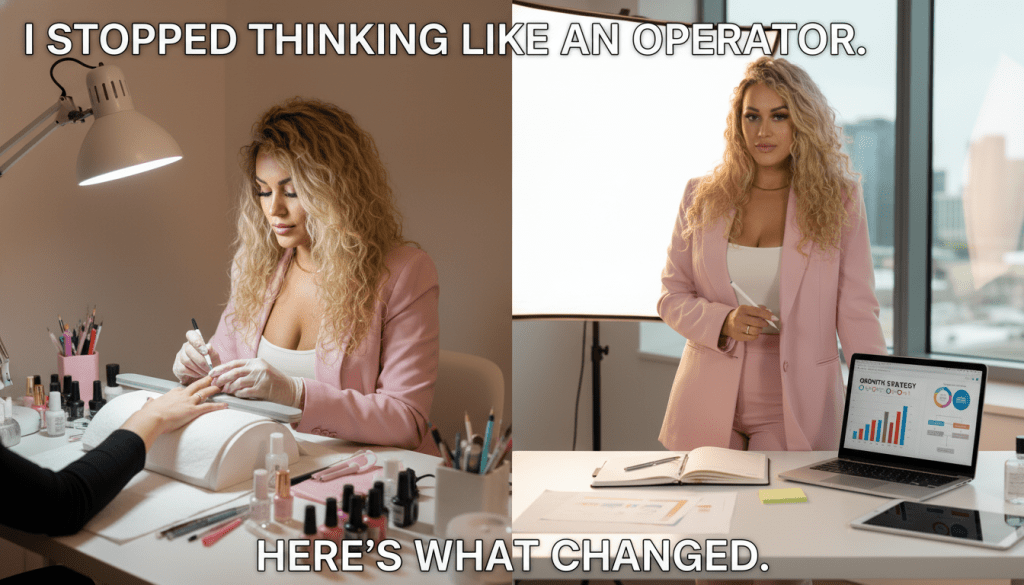






 Michele Alexandria