born in 1915, Édith Piaf was the embodiment of the tragic and the beautiful, a symbol of hope amidst the chaos.

  • Empowerment in Tech: My Journey at an International Women’s Day Event

    HELLO, BEAUTIFUL,

    March came in with a lot of energy, and I am here for every single bit of it.

    The past few months have been about building. This has been done quietly and intentionally. We have a clear vision of where Bellezza Miami is headed. But this week something happened that I have to share with you because it felt like a real marker moment. The kind you want to look back on and remember exactly where you were standing when it happened.

    Let’s get into it.


    THIS WEEK’S MAIN STORY

    They Invited Me to the Table — And I Showed Up.

    I didn’t apply.

    I didn’t pitch myself.

    I got a personal invite.

    This past Sunday, I was invited to an International Women’s Day event. It was sponsored by Lovable and hosted inside one of Miami’s tech hubs. I want to be honest with you about what that felt like. I believe many of you are going to relate to this more than you realize.

    A year ago, I wouldn’t have even seen myself in that room.

    I’m a beauty founder. I build DIY manicure kits. I talk about e-commerce and scaling. I also discuss the unglamorous behind-the-scenes of running a product-based business. I am a single mom who decided she wanted more for herself and her family. Tech spaces weren’t part of my world — or at least, that’s what I told myself.

    But something shifted when I started showing up consistently. When I stopped waiting until I had the right title, the right revenue numbers, the right following, the right anything. I just kept showing up. To events. To rooms. To conversations I wasn’t sure I belonged in.

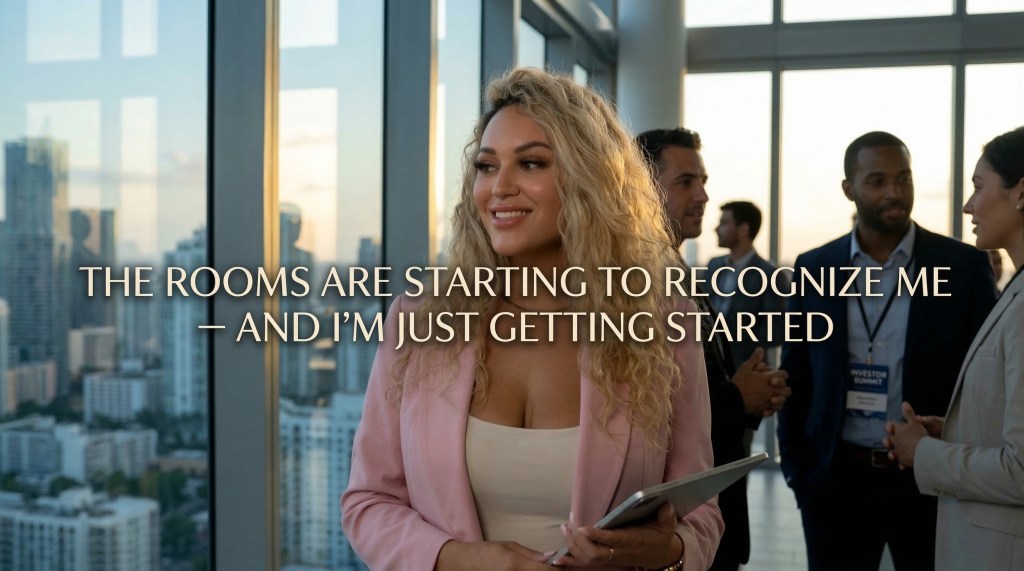
    And the rooms started noticing.

    Walking into that event on Sunday, I wasn’t a guest who snuck in through the back. I was personally invited. That distinction matters. It’s not about ego. It’s because it told me something important about what consistent, visible work actually does over time.

    Being in that space on International Women’s Day was empowering. I was surrounded by women who are building, funding, and scaling tech companies. It didn’t make me feel out of place. It made me realize I was exactly where I was supposed to be.

    Because here’s what I know now that I didn’t fully own before:

    The intersection of beauty and tech is where I live. E-commerce is tech. AI tools are running my backend operations. My ad strategy, my email flows, my content systems, my product launch infrastructure — all of it is tech. I have been operating in the tech space this whole time.

    I just hadn’t claimed that identity yet.

    This invite did something for me that I didn’t expect. It confirmed that the work is visible. That consistency builds credibility even before the revenue reflects it. That your face becoming familiar in rooms is a strategy — not an accident. And that the right people are always watching, even when you think nobody sees you yet.

    If you are building something right now that doesn’t fit neatly into one category, if you feel like you are always the wildcard in the room, if you wonder whether showing up over and over again is actually doing anything — I want you to hear this directly from me:

    It is working. Keep going.


    WHAT I’VE BEEN LEARNING IN THE TECH ROOMS

    Since I started attending more tech events over the past few weeks, I’ve been taking mental notes on everything. The way founders talk about their businesses. The way they think about systems and scale. The tools they’re using. The problems they’re solving. And what I keep coming back to is this — the fundamentals are the same.

    Whether you are building a SaaS company or a beauty e-commerce brand, the conversation always comes back to one question. Who is your customer? What problem are you solving? How are you acquiring them? How are you keeping them? How are you scaling without breaking?

    Beauty founders need to be in these rooms. Full stop. In the last 30 days, I’ve gained valuable insights from tech founders. These insights have directly shaped how I’m thinking about Bellezza Miami next quarter. They approach customer retention in innovative ways. They excel in paid acquisition. Building systems before they need them is standard practice. It’s changing how I operate.

    And the cross-pollination goes both ways. I’ve had tech founders who are genuinely curious about the beauty e-commerce space. They are interested in the customer psychology. They explore the product development cycles and the community-building side of it. We have something to offer these rooms too. Don’t forget that.


    WHAT’S HAPPENING INSIDE BELLEZZA MIAMI RIGHT NOW

    Since we’re in full build mode over here, here’s a quick look at what I’m working on behind the scenes:

    Email platform migration — We are in the process of fully moving over to Klaviyo. If you’ve been a subscriber for a while, you may notice some changes to how our emails look and feel. It’s all intentional. Klaviyo gives us the ability to create smarter, more personalized flows. This ensures you’re receiving content and offers that are actually relevant to you.

    Spring collection prep — We are deep in planning for our spring launch. I can’t wait to share what’s coming. Think fresh, elevated, and very much designed for the woman who takes her self-care seriously. More details coming soon.

    Content and community — I’ve been much more intentional about where I’m showing up online and in person. LinkedIn has become a real home for me. I’d love to connect with you there if we’re not already connected. I share the behind-the-scenes of scaling Bellezza. I also share lessons from the events I’m attending. Lastly, I offer the honest truth about what building looks like day to day.


    A NOTE FOR INTERNATIONAL WOMEN’S DAY

    To every woman who is building something from scratch — without a roadmap, without a safety net, and sometimes without anyone in your corner who fully understands the vision:

    You are doing something incredibly brave.

    Not because it’s hard — although it is. But because you chose to bet on yourself in a world that doesn’t always make that easy. That takes a specific courage that doesn’t get talked about enough.

    This International Women’s Day, I’m not just celebrating the women who have already made it. I’m celebrating the ones in the middle of it. The ones who are tired but still going. The ones whose revenue doesn’t yet show how hard they’re working. The ones showing up to rooms where they don’t know anyone and doing it anyway.

    That is where the real story is. And that’s the story I’m committed to telling.

    Keep showing up. The invite will come. And when it does — you better be ready to walk through that door. 🌸


    BEFORE YOU GO

    A few things worth your time this week:

    — If you haven’t already, follow along on LinkedIn. I’m sharing real-time updates there. You can see what building Bellezza Miami actually looks like.

    — Our spring collection is coming. Make sure you’re subscribed so you’re the first to know when it drops.

    — If this newsletter resonated with you, share it. Send it to a woman in your life who needs to hear it today. That’s how we grow this community — one real conversation at a time.


    With love and intention,

    Michele Alexandria Founder, Bellezza Miami


    © 2023 Bellezza Miami | Miami, FL
  • Building a Brand: The Power of Strategic Content

    Last week, I got a message that validated everything I’ve been building.

    A beauty brand reached out. They wanted to talk about me becoming a brand ambassador for their line.

    Not because I have a massive audience. Not because I paid for ads. Not because I’m some big influencer.

    They found me through my newsletters and blog posts on LinkedIn.

    Let me tell you what actually happened—and what it means if you’re building a brand right now.

    How They Found Me

    The message came through WhatsApp.

    They’d seen my LinkedIn. Noticed I own a nail brand in Miami. Clicked through to my WordPress articles. Followed the breadcrumbs of content I’ve been consistently dropping.

    They understood my positioning as a beauty voice building a personal brand.

    And they reached out.

    Here’s what hit me: I’ve been writing these articles for months. Linking them on LinkedIn. Showing up consistently with my voice, my perspective, my journey.

    Not chasing viral moments. Not obsessing over follower counts. Just building content infrastructure that works while I sleep.

    And it worked.

    The Partnership Structure

    Let’s be real about what this actually is.

    It’s not a massive paid deal (yet). It’s product seeding that leads to affiliate commissions.

    They send products. I create content featuring their line through blog posts and social media. I earn commissions on sales.

    Classic partnership funnel: Free products → prove value through content → affiliate structure → paid partnerships.

    You build credibility through proof, not promises.

    This is how these relationships scale. You start small. You deliver results. You build trust. Then the real money follows.

    I’m playing the long game here.

    What This Actually Means

    This partnership does something strategic for my business trajectory:

    It trains the algorithm that I’m a beauty brand voice.

    Every piece of content I create featuring beauty products signals to platforms: “Michele talks about beauty.” Every tag, every mention, every post builds a pattern.

    Which means more beauty brands will find me. More partnership opportunities will land in my inbox. More proof of concept that brands want to work with me.

    I’m not just taking a partnership—I’m building a reputation that attracts better partnerships.

    The Lesson Nobody Talks About

    Here’s what nobody tells you about platform building:

    Followers are vanity metrics. Content is infrastructure.

    I don’t have hundreds of thousands of followers. I’ve been consistently showing up with written content. It demonstrates who I am. It shows what I know and where I’m going.

    Newsletters. Blog posts. LinkedIn articles.

    Not motivational fluff. Not generic inspiration. Actual strategic content that positions me as someone building real businesses in the beauty space.

    And brands noticed.

    Because brands don’t care about your follower count as much as you think they do.

    They care about alignment. They care about voice. They care about whether you can actually move product and build credibility for their line.

    Your content proves all of that—or it doesn’t.

    What This Looks Like in Practice

    For months, I’ve been linking my WordPress articles on LinkedIn.

    Writing about my journey scaling my nail business. Documenting the transition from operator to CEO. Sharing the real, unglamorous work of building infrastructure before chasing revenue.

    Not every post goes viral. Not every article gets thousands of views.

    But the right people are reading.

    And that’s what matters.

    One beauty brand executive scrolling LinkedIn at 11pm saw my content and thought: “This person gets it. This person will represent our brand well.”

    That’s the power of consistent, strategic content.

    It works while you’re sleeping. It builds relationships you didn’t know you were creating. It opens doors you didn’t even know existed.

    Where This Goes Next

    I’m treating this partnership like the beginning of something bigger.

    Right now, it’s product seeding and affiliate commissions.

    But I’m documenting everything. Creating content that delivers results. Building proof that I can move product and represent brands well.

    Because the next brand that reaches out? They’ll see I’m already working with beauty brands. They’ll see I deliver. They’ll see I’m not just talking about building a beauty empire—I’m actively doing it.

    That’s when the paid partnerships start rolling in.

    If You’re Building Your Own Brand

    Stop obsessing over follower counts.

    Start building content that positions you as the person brands want to work with.

    Write. Link your work. Show up consistently. Document your journey.

    Not because you’re trying to go viral. Because you’re building infrastructure that creates opportunities while you’re not even looking for them.

    Newsletters that land in inboxes. Blog posts that rank in search. LinkedIn articles that get shared in group chats.

    That’s the content that works.

    Eventually, the right person reads it at the right time. They reach out with an opportunity you didn’t even know was coming.

    That’s what happened to me last week.

    And it can happen to you too.


    Want insights like this delivered straight to your inbox?

    I write about building real businesses in the beauty space. This includes the unglamorous infrastructure work and the strategic pivots. I cover the lessons nobody talks about.

    Subscribe to my newsletter and let’s build together.

  • Data-Driven Growth: Insights from Week 2 Execution

    Week 2 of executing my systems.

    And here’s what I’m tracking: movement.

    Not just results movement. This is the ongoing progress that compounds over time. It doesn’t always show up instantly in the metrics everyone else obsesses over.

    Let me show you what I mean.

    The email sequences I built? Running. Every new subscriber is going through the welcome flow, getting the nail prep guide, seeing the kits. I’m watching open rates, click patterns, where people engage and where they drop off. That’s data I can use.

    The content calendar I planned? Posted. Every piece went live when it was supposed to. No scrambling. No “what should I say today?” I followed the plan, and now I’m seeing which topics resonate, which formats work, which posting times get traction.

    The Sunday planning system? Used. I blocked my week before it started. I knew what I was working on every day. And when unexpected things came up, I had structure to come back to instead of spiraling into reactive mode.

    That’s movement.

    And here’s what I’m learning: execution teaches you things planning never will.

    You can theorize all day about what will work. But until you actually do it—post the content, run the sequences, follow the plan—you don’t know what resonates. You don’t have real feedback. You don’t see the patterns.

    This week taught me more about my audience than the earlier month of planning did.

    I learned which email topic lines get opened. Which content makes people stop scrolling. What time of day my audience is actually paying attention. What questions they’re asking. What objections come up before they’re ready to buy.

    That’s the value of Week 2. Not perfection. Not proof that everything works exactly how I hoped. But real data from real execution that I can actually use to improve.

    Because here’s the truth: most people quit before they get to Week 2.

    They execute for a few days, don’t see immediate validation, and decide the process doesn’t work. They go back to reactive mode. They convince themselves that winging it is more efficient because at least it feels like they’re doing something.

    But sticking to the plan IS doing something.

    After pursuing through when it would be easier to abandon it IS progress.

    Collecting data from real execution IS valuable even when it’s not the data you hoped for.

    So yeah, Week 2. I’m learning. I’m adjusting. I’m seeing what works and what needs tweaking. And I’m staying disciplined enough to keep adhering to the systems instead of abandoning them the moment they feel hard.

    That’s movement. And movement compounds.

    What does your Week 2 look like? What are you learning from actually executing? What data are you collecting? What’s working that you didn’t expect, or what needs adjusting that you couldn’t have known from planning alone?

    Hit reply and tell me. Because I guarantee you’re learning more than you think you are. You just be looking for the wrong signals.

    -Michele Alexandria

    P.S. The difference between entrepreneurs who scale and those who stay stuck isn’t talent or resources. The key is whether they stick around long enough to learn what actually works. Week 2 is where most people quit. Don’t be most people.

  • Master Your Week: The Power of Sunday Planning

    I’m done winging my weeks.

    I’ve spent too many Monday mornings sitting at my desk with coffee. I stare at my calendar. I try to figure out what I should be working on. Too many Tuesdays scrambling to write a post because I should probably say something. Too many Wednesdays realizing I forgot to prep for a launch or follow up on something important.

    That’s reactive work. That’s how you stay stuck in operator mode, constantly putting out fires instead of building anything meaningful.

    So starting this Sunday, I’m changing how I approach my entire week.

    I’m using Sundays to build my week before Monday even hits.

    Here’s what I’m batching every Sunday from now on:

    Content for the week. All posts written. All emails drafted. Everything scheduled and done. No more staring at a blank screen on Tuesday morning wondering what to say.

    Workflows mapped. What needs to happen when. What’s dependent on what. Where the bottlenecks are. So I’m not discovering problems in real-time while I’m trying to execute.

    Full schedule built. Every work block planned out. Every task assigned to a specific time. Not just a to-do list that I’ll look at once and ignore—an actual plan for how my time gets spent.

    One focused hour on Sunday. That’s all this takes.

    And that one hour saves me ten scattered, fragmented, decision-fatigued hours during the week.

    Because here’s what I’ve learned: Monday morning shouldn’t start with “what do I post today?” or “what’s the priority?” Those are questions you answer when you’re thinking strategically, not when you’re already in execution mode.

    When Monday starts, I want to already know exactly what I’m working on. I want to open my calendar and just… do the work. Not decide what the work should be.

    That’s the difference between CEO mode and operator mode.

    Operators react. They respond to whatever’s in front of them. They handle what’s urgent and hope they get to what’s important.

    CEOs plan. They decide what matters before the week starts. They create the conditions for focused work instead of hoping focus somehow emerges between interruptions.

    I’ve been operating for too long. Reacting for too long. Scrambling for too long.

    Sunday planning is how I reclaim that time.

    It’s not complicated. It’s not some elaborate productivity system that requires apps and templates and color-coded categories. I just sit down for an hour. I think through the week ahead before I’m already in the middle of it.

    What do I need to communicate this week? Write it now. What are my priorities? Block time for them now. What derail me? Plan around it now.

    No decision fatigue. No scrambling. Just execution.

    The truth is, I don’t have unlimited time. I also don’t have unlimited energy to waste on figuring out what to do. I should be doing it. I’m a single mom running two brands. Every hour matters. Every bit of mental energy matters.

    So I’m done letting my weeks just happen to me.

    I’m planning them. Intentionally. Strategically. Before Monday morning ever arrives.

    That’s the shift.

    Do you plan your week or do you let your week plan you? Hit reply and tell me what your Sunday (or whenever you do it) looks like. Are you already doing this? Trying to start? Convinced planning is a waste of time? I’m curious where you’re at with this.

    -Michele Alexandria

    P.S. If you’ve been meaning to get more strategic about your time but keep putting it off, just try one Sunday. One hour. See what happens when you walk into Monday already knowing exactly what you’re working on. You might surprise yourself.

  • Outgrowing Tools: The Journey from Beginner to Advanced Email Marketing

    Before I switched to Klaviyo, Kit taught me everything I know about email.

    And I mean everything.

    Kit is where I built my first email sequence. I fumbled through it, honestly. However, I got it done in under an hour. Kit is where I learned that email actually converts. That people don’t just tolerate emails from businesses they like; they actually want to hear from you.

    Kit is where I figured out that I can write in my own voice and people would respond. I realized that I didn’t need to sound like a corporate marketing team. I also didn’t need to hire a copywriter or pretend to be someone I’m not.

    It was creator-friendly in the way that mattered most when I was just starting. I didn’t need to be a marketer to use it. I didn’t need to know what a segmentation strategy was or how to set up complex conditional logic. I just needed to write emails and send them to people who wanted to hear from me.

    That’s what Kit gave me. The fundamentals. The confidence. The proof that this whole email thing actually works.

    I’m not switching because Kit failed me. I’m switching because I outgrew it.

    And that’s not a criticism—it’s actually the highest compliment I can give a tool. It did exactly what it was supposed to do. It met me where I was and helped me get to where I needed to be next.

    But now I need something different. I need more sophisticated automation. Better segmentation. Deeper integration with my e-commerce platform. The functionality that doesn’t make sense until you’ve already proven the basics work.

    Kit taught me to walk. Klaviyo will teach me to run.

    This is the shift from Launch to Scale that nobody really talks about:

    The tools that got you here won’t always get you there.

    And that’s okay. Actually, it’s more than okay—it’s how growth is supposed to work.

    You start with what’s accessible. You learn the fundamentals. You prove the concept. Then, when you’re ready, you level up to something that matches your new capacity.

    I see this same pattern everywhere in my business right now. The spreadsheet that worked when I had 20 SKUs doesn’t work now that I have 200. The content strategy that got me my first followers isn’t the same one that will build a sustainable brand. When I was fulfilling orders from my dining room table, I managed inventory in a certain way. It doesn’t scale to a warehouse operation.

    None of those early tools or systems were wrong. They were exactly right for that stage. But staying loyal to them past their usefulness isn’t integrity—it’s stubbornness.

    There’s a weird guilt that comes with outgrowing things. Like you’re betraying the tool that helped you or admitting you didn’t know what you were doing back then. But that’s not what this is.

    This is recognizing that different stages need different infrastructure.

    This is about being honest about where you are. It focuses on what you actually need now, instead of what you needed six months ago.

    This is giving yourself permission to evolve instead of staying small to match your original systems.

    So yeah, I’m switching platforms. And I’m grateful to Kit for being exactly what I needed when I needed it. For teaching me that email marketing isn’t this mysterious, complicated thing that only “real marketers” can do. For giving me the foundation that everything else is built on.

    But I’m not that person anymore. My business isn’t that business anymore. And the tools I’m choosing now show that.

    What tool taught you the basics that you’ve now outgrown? Hit reply and tell me about something that served you perfectly at one stage. Now, it doesn’t fit where you’re headed anymore. I’m curious what you held onto too long or what you leveled up from at exactly the right time.

    -Michele Alexandria

    P.S. If you’re in that weird in-between space where you know you’ve outgrown something but switching feels overwhelming, I get it. I’ve been sitting on this Klaviyo decision for months. Sometimes the hardest part isn’t the technical migration it’s giving yourself permission to admit you’re ready for the next level.

  • Engineering Sales While I Sleep

    I’m switching my email platform from Kit to Klaviyo this week.

    Not because Kit is bad. It’s not. But because I’ve reached the point where I need my emails to do more than just… exist. I need them to actually work for my business while I’m doing literally anything else.

    Here’s what I’m building:

    A welcome sequence that introduces who I am. It explains why I care about DIY manicures. It also tells the story of how I went from nail tech to business operator. Not a sales pitch. Just context.

    Value drops that people can actually use. This includes a free nail prep guide. There are also tips they can implement right away. It is the information that makes them think “okay, she knows what she’s talking about.”

    A soft pitch that introduces my kits without pressure. No urgency tactics. No false scarcity. Just “here’s what I built, here’s who it’s for, here’s where to get it if you want it.”

    Social proof from real customers with real results. Because nothing sells better than someone else saying “this actually worked.”

    This isn’t complicated. It’s just intentional.

    And that’s the part most people skip.

    They send one email when they launch something. Maybe two if they’re feeling ambitious. Then they wonder why nobody’s buying and assume email doesn’t work for their business.

    But here’s the thing—most people don’t buy on the first touch. They need to see you show up consistently. You must give value without asking for anything. Prove you understand their problem before they’re ready to trust your solution.

    That’s why I’m spending this week building a sequence instead of just blasting out a “buy my stuff” email.

    The work I’m doing right now involves several tasks. These tasks include mapping the funnel, writing the sequence, setting up the automations, and testing the flows. This work will run my business for the next six months. Maybe longer.

    Every person who joins my email list from this point onward will go through this system. They’ll get the same nurture, the same value, the same introduction to what I’m building. Whether I’m actively working or not.

    That’s the difference between hoping for sales and engineering them.

    It’s the difference between trading your time for every single deal and building leverage.

    Most people don’t want to do this work. It’s not instant. There’s no immediate gratification. You can spend an entire week setting up email sequences and have exactly zero revenue to show for it.

    I’ve been in business long enough to understand one thing. The systems you build when nobody’s watching are what carry you when everyone is.

    I’m not winging it anymore. I did that for too long. I posted when I remembered. I sent emails when I felt like it. I hoped the algorithm would be kind to me that day.

    Now I’m building infrastructure. The unseen, behind-the-scenes work that makes everything else possible.

    So yeah, I’m switching platforms and rebuilding my entire email system this week. And no, it’s not generating revenue right now. But six months from now? A year from now? This is the foundation everything else is built on.

    Do you have an email system or are you winging it? Hit reply and tell me what your email strategy actually looks like or if you’re like most people and just… don’t have one yet. No judgment. Just curious where you’re at.

    -Michele Alexandria

    P.S. If you’re ready to build real systems, let’s talk. Stop just posting and praying. I’m documenting this whole infrastructure-building phase and would love to hear what you’re working on behind the scenes.

  • Building the Machine First

    I’m doing something most people would call backwards.

    I’m sitting here mapping out content for my DIY manicure kits. This includes Valentine’s Day launches and spring collections. I have the next three months laid out. I haven’t made a single sale from this system yet.

    Not one.

    Most people would tell me I’m overthinking it. That I should just post and see what sticks. Test the market. Feel it out.

    But here’s what I’ve learned from building my nail supply business from the ground up. If you post randomly, you get random results. And I’m done with random.

    I spent years in my studio doing nails. I learned what clients actually wanted. I found out what made them come back and what made them tell their friends. When I pivoted to e-commerce, I brought that same approach—watch the patterns, build the method, then scale what works. Not the other way around.

    So right now, while there’s no revenue coming from this content yet, I’m building infrastructure. I’m creating the machine that will feed my business whether I feel inspired on a Tuesday morning or not. Whether I’m having a good day or dealing with sick kids or just completely out of creative energy.

    The content calendar isn’t the sexy part. Nobody’s going to congratulate you for planning three months ahead. There’s no dopamine hit from organizing your launch sequence while everyone else is posting their wins.

    But it’s the difference between posting when you remember and showing up like you actually mean it.

    It’s the difference between hoping something works and building something that’s designed to work.

    I’m not guessing what to post while I’m drinking my coffee at 8am. I’m not scrambling to come up with something clever because it’s been three days and I should probably say something. I’m following a plan that’s connected to my business goals, my product launches, my actual revenue strategy.

    Infrastructure first. Sales second.

    That’s not how most people want to do it. It requires sitting with the discomfort of building something that hasn’t proven itself yet. It means investing time before you see the return. It means being in the building phase and being honest about it instead of inflating where you actually are.

    But this is how operators think. We build systems. We create leverage. We do the unsexy work now so we’re not constantly firefighting later.

    So yeah, I’m mapping content with zero sales to show for it. I’m building the machine while everyone else is chasing the quick win.

    And I’m completely okay with that.

    What are you building before you chase the sale? Hit reply and tell me about the infrastructure you’re putting in place right now. It’s not generating revenue yet. But you know it will matter six months from now.

    Michele

    P.S. If you’re also in the “building the machine” phase, just respond to this email. Let’s talk through your strategy. I’d love to hear your story. I’m collecting stories from founders who get that infrastructure isn’t sexy but it’s everything. Let’s compare notes.

  • I’m Building With the Intent to Teach Others. It’s Changing Everything.

    I’m not just building a business anymore.

    I’m building it as a case study.

    Every system I create. Every decision I make. Every test I run.

    I’m documenting it with the intent to teach it to someone else later.

    And that shift building with the intent to teach is changing how I build.


    Why I’m Doing This

    Eventually, I want to help other women scale their businesses.

    Not in some distant, vague future. But as the next chapter after I’ve built this e-commerce business to where I need it to be.

    I know what it’s like to build from scratch with no roadmap. To figure out operations by doing every part yourself. To pivot when what you built isn’t working anymore. To scale as a single mother with no safety net.

    I’ve lived the learning curve. And I want to help others navigate it without having to figure out everything the hard way like I did.

    But here’s what I realized. If I wait until I’m “done” building to start documenting what I learned, I’ll lose the details that matter most.

    The small decisions. The specific tools. The exact process. The mistakes I made and how I fixed them.

    So I’m not waiting. I’m documenting while I’m building.


    What This Actually Looks Like

    I’m treating my business like a real-time case study.

    When I build a new system: I don’t just build it and move on. I document why I built it this way. I note what I tested first and what didn’t work. I also describe what the final version looks like.

    When I make a strategic decision: I write down what I was choosing between. I note what factors I considered. I record what made me pick this path over that one.

    When I test something: I track not just the results, but the process. What I expected to happen. What actually happened. What I’d do differently next time.

    I’m creating a record of how I’m building. Not just what I built.

    Because when I eventually teach this, the how matters more than the what.


    How This Changes How I Build

    Building with the intent to teach forces a different level of clarity.

    1. I can’t skip steps anymore

    When I was just building for myself, I can take shortcuts. Do things in a way that “just worked” even if I didn’t fully understand why.

    But if I’m going to teach this later, I need to actually understand it. Not just do it.

    So I’m more intentional now. I break things down. I think through why something works, not just that it works.

    And that makes me better at building. Because clarity leads to better systems.

    2. I’m creating frameworks as I go

    Before, I’d solve a problem and move on.

    Now, when I solve a problem, I turn the solution into a framework.

    How did I decide which automation tool to use? There’s a framework for that now.

    How do I confirm product demand before investing in inventory? That’s a process I documented.

    How do I decide what to automate vs. what to hire for vs. what to just keep doing myself? I built a decision tree.

    These frameworks make me faster. Because I’m not solving the same problem from scratch every time it comes up.

    But they also become teaching tools later.

    3. I’m keeping track of what I wish I’d known

    Every time I hit a learning curve, I take notes. I always think, “I wish someone had told me this before I spent three weeks figuring it out.”

    Those moments become the foundation of what I’ll teach.

    Because the best teachers aren’t the ones who never struggled. They remember what it felt like to not know. They can translate their hard-won knowledge into something others can actually use.

    4. I’m building with replicability in mind

    When I create a system, I’m not just asking “Does this work for me?”

    I’m asking “Could someone else follow this process and get similar results?”

    That forces me to build cleaner systems. Better documentation. More structured processes.

    And that makes my business more scalable. Because if someone else could theoretically run it, that means it’s not dependent on me being in every detail.


    What I’m Documenting Right Now

    I’m keeping records of:

    The pivot from service-based to e-commerce:

    • Why I made the decision
    • How I handled the transition financially
    • What I did to reduce risk
    • What I’d do differently

    Building systems that scale:

    • Which automations I implemented first and why
    • What tools I use and what they actually do
    • The exact workflows I built
    • What broke and how I fixed it

    Validating demand before inventory:

    • The testing process I use
    • How I read the data
    • When to invest vs. when to move on
    • Real examples with numbers

    Strategic execution:

    • How I went from idea phase to implementation
    • The frameworks I use to make decisions faster
    • How I prioritize when everything feels urgent

    All of this becomes teaching material later. But it’s also making me a better operator right now.


    The Unexpected Benefit

    I thought documenting everything would slow me down.

    But it’s actually making me faster.

    Because when I have to explain my process to future-me (or future-students), I have to understand it clearly.

    And clarity speeds up execution.

    I’m not second-guessing as much. I’m not reinventing solutions to problems I’ve already solved. I’m building on what I’ve documented instead of starting from scratch every time.


    Why This Matters for Where I’m Going

    I don’t just want to build a successful business.

    I want to build a successful business and then help other women do the same thing.

    Especially women who are building solo. Who don’t have formal business education. Who are learning by doing. Who are single mothers trying to create something that supports their families.

    Because I know what it’s like to not have a roadmap. To feel like you’re making it up as you go. To wish someone who’d been through it could just show you the way.

    So I’m building that roadmap. While I’m still on the journey.

    Not waiting until I’m “done” to start teaching. But building with teaching in mind from the beginning.


    Where I Am Now

    I’m not teaching yet. I’m still building.

    But I’m building with intention. Documenting as I go. Creating frameworks. Tracking what works and what doesn’t.

    When I step into mentorship, this business will be scaled to where I need it to be. I won’t just have my own success story.

    I’ll have a system. A process. A roadmap that someone else can actually follow.

    That’s the goal. Not just to scale. But to scale in a way that creates value beyond my own business.

    And that shift building with the intent to teach is changing everything about how I build.

    — Michele Alexandria


    Are you building with the intent to teach what you’re learning? How does that change your approach?

    Subscribe to my newsletter for insights from someone documenting the journey in real time. I am building to scale and building to share.

  • Brand Deals Don’t Come From Followers. They Come From This.

    Brand Deals Don’t Come From Followers. They Come From This.


    I used to think brand deals were for people with massive followings.

    100K followers. Verified accounts. People who were “influencers.”

    That’s not me. I’m building a business, not chasing follower counts.

    But I started getting reached out to for brand partnerships anyway.

    And I realized: brands don’t actually care about your follower count as much as you think they do.

    They care about something else entirely.


    What Brands Actually Want

    Brands aren’t looking for followers. They’re looking for sales.

    They don’t care if you have 50K people who scroll past your content.

    They care if you have 2K people who actually buy what you recommend.

    That’s the shift I didn’t understand at first.

    Follower count is a vanity metric. Conversion is what matters.

    And once I understood that, everything changed about how I positioned myself.


    What Gets You Brand Deals (From What I’ve Seen)

    1. Proof you can move product

    Brands want to know if they send you a product, will it result in sales? Will paying you to promote this actually lead to purchases?

    They’re not impressed by your follower count. They’re impressed by your track record.

    So when I get approached now, I don’t lead with “I have X followers.”

    I lead with: “Here’s what happened the last time I promoted a product. Here’s the engagement. Here’s the conversion rate. Here’s the feedback from my audience.”

    That’s what gets brands interested. Proof you can actually drive results.

    2. A specific, engaged audience

    Brands prefer to work with someone who has 3K highly engaged followers. These followers are in a specific niche. This is more valuable than someone with 50K random followers who don’t interact.

    Because specificity converts.

    If you’re a generalist with a broad audience, brands don’t know if their product will resonate.

    If you have a specific audience, brands in that space know you’re worth talking to. This includes e-commerce founders, single mother entrepreneurs, and women scaling product-based businesses.

    Your audience might be smaller. But it’s targeted. And that’s more valuable.

    3. Content quality and consistency

    Brands want to see that you can create content that looks good and performs well.

    Not perfectly polished influencer content. Just content that’s clear, engaging, and actually gets response.

    They want to know you’re consistent. That you show up. That you’re not going to disappear after they send you product.

    And they want to see that your audience trusts you. Because if they don’t, the partnership won’t convert anyway.

    4. An email list or owned audience

    This is the one most people miss.

    Brands love when you have an email list. Because that’s an audience you own, not one that’s at the mercy of an algorithm.

    When I mention my email list size in partnership conversations, that’s often what seals it.

    Because they know that if the social post doesn’t get seen, I can still reach my audience directly.

    That’s leverage.


    What Changed When I Understood This

    I stopped trying to grow my follower count for the sake of numbers.

    And started focusing on building an engaged, specific audience that actually responds to what I share.

    I stopped worrying about whether I was “big enough” to get brand deals.

    And started positioning myself around what I could actually deliver: conversion, engagement, and access to a specific audience.

    And the partnerships started coming.

    Not because I hit some follower threshold. But because I had proof I could move product and reach the right people.


    How I Position Myself Now

    When I’m approached by a brand—or when I reach out to one I want to work with—here’s what I lead with:

    1. My audience demographics

    Not just “women entrepreneurs.” But specifics: e-commerce founders, product-based business owners, women scaling without teams, single mothers building businesses.

    That tells them exactly who I reach. And whether it aligns with their customer base.

    2. My engagement metrics

    Not follower count. But engagement rate. How many people actually interact with my content. How many click links. How many buy when I recommend something.

    That’s what they care about.

    3. My email list

    How many people I can reach directly. Because that’s an asset they can’t get from most creators.

    4. Case studies from past promotions

    If I’ve promoted a product or service before, I share the results. What happened. What converted. What my audience responded to.

    That’s proof. And proof matters more than promises.


    The Partnerships I’m Building

    I’m not trying to work with every brand. I’m being selective.

    I only partner with brands that:

    • Align with what my audience actually needs
    • I would use or recommend anyway
    • Are willing to focus on conversion, not just exposure

    Because here’s the thing: if I promote something my audience doesn’t want, I lose their trust. And trust is the only reason brand deals work in the first place.

    So I’m building partnerships that make sense for my audience first. And that approach is what’s making brands want to work with me.

    Not my follower count. My ability to connect the right product with the right people and actually drive results.


    What This Means If You’re Building

    You don’t need 100K followers to get brand deals.

    You need:

    • A specific, engaged audience
    • Proof you can drive results
    • Consistency in showing up
    • An owned audience (email list, community, etc.)
    • Content that performs

    Focus on those. And the partnerships will come.

    Not because you’re “big enough.” But because you’re valuable to the brands that matter.


    The Real Lesson

    Brand deals aren’t about popularity. They’re about conversion.

    Brands don’t care if people see your content. They care if people buy because of it.

    And once you shift your focus from chasing followers to building trust and driving results?

    That’s when the partnerships start making sense. For you and for them.

    — Michele Alexandria


    Have you landed brand deals without a massive audience? What actually got brands interested in working with you?

    Subscribe to my newsletter for more insights on building a business that attracts partnerships. They will come not because you’re famous, but because you deliver results.


    Ready to post.

  • I’m Building for Wealth, Not Just Income. Here’s the Difference.

    For years, I focused on income.

    Monthly revenue. How much came in. How much I can pay myself. Whether I cover rent and still have something left over.

    Income was the goal. Because income meant stability. And as a single mother, stability was everything.

    But somewhere in the last year, my focus shifted.

    I’m not just building for income anymore.

    I’m building for wealth.

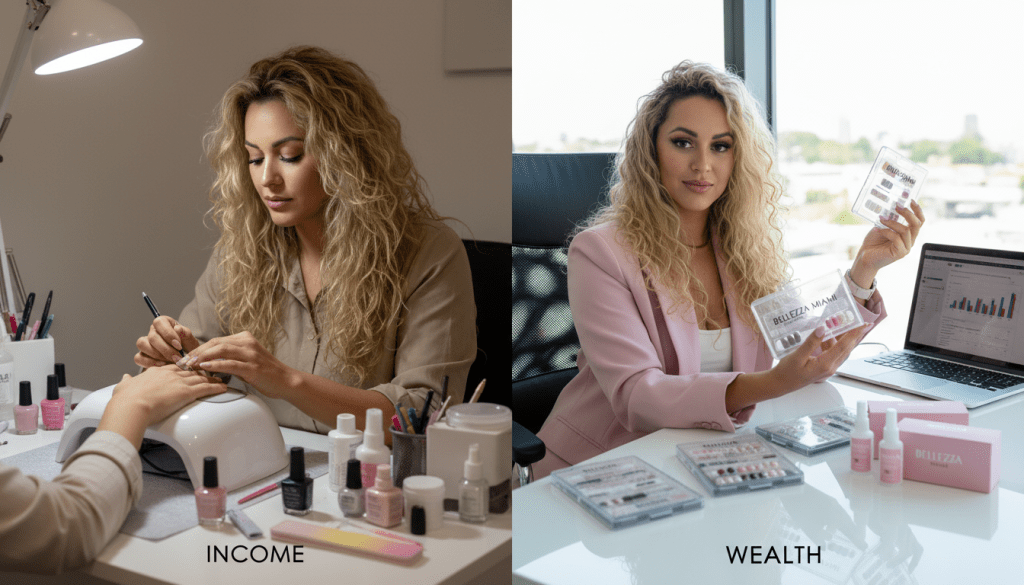
    And those two things are not the same.


    What Income Thinking Looked Like

    When you’re focused on income, you’re asking: “How much can I make this month?”

    Every decision is filtered through: Will this bring in money now?

    I’d take on clients because they were ready to pay. Even if the work didn’t align with where I wanted the business to go.

    I’d say yes to things that generated immediate revenue. Even if they kept me stuck in the same cycle.

    I was optimizing for cash flow. For keeping things moving. For making sure the bills got paid.

    And there’s nothing wrong with that. When you’re building from scratch with no safety net, income is survival.

    But income thinking keeps you in a loop: you work, you get paid, you work more to get paid more.

    There’s no compounding. No leverage. No exit.

    You’re trading time and energy for money. And the second you stop, the money stops too.


    When the Shift Started

    The shift didn’t happen all at once. It started during that Scale Up program last summer.

    I was in rooms with founders who weren’t just thinking about monthly revenue. They were thinking about enterprise value. Exit multiples. What their business would be worth if they sold it.

    And I realized—I’d never thought about my business that way.

    I had been so focused on “how do I make enough this month?” I never asked myself, “what am I actually building here?”

    The business I was running included studio work and service delivery. It wasn’t worth anything beyond the revenue it generated while I was running it.

    If I stopped working, the business stopped existing.

    That’s income. Not wealth.


    What Wealth Thinking Looks Like

    Wealth isn’t about how much you make. It’s about what you build that holds value independent of your time.

    Income thinking: How do I generate more revenue this month?

    Wealth thinking: What am I building that will be worth something even if I’m not actively working in it?

    Income thinking: I need to take on more clients to increase revenue.

    Wealth thinking: I need to build systems and assets that generate revenue without requiring more of my time.

    Income thinking: This brought in $5K this month, so it’s working.

    Wealth thinking: This brought in $10K this month, but it required 60 hours of my time. That’s not scalable. What can I build that generates $10K without the 60 hours?

    The difference is leverage. And compounding. And building something that has value beyond what you personally produce.


    What This Looks Like in My Business

    When I was running the studio, I was generating income. Good income, actually.

    But the business had no value beyond me showing up every day. If I stopped, the revenue stopped. There was nothing to sell. No systems anyone else can run. No asset that existed independently.

    That’s why I pivoted.

    I stepped away from the service work and went all-in on e-commerce. Not because e-commerce automatically builds wealth. But because it’s a model that can.

    Here’s what I’m building now that focuses on wealth, not just income:

    1. Systems that run without me

    Every automation I build and every process I document contribute to building wealth. Every system I create that can operate without my direct involvement also builds wealth.

    Because it means the business can operate and generate revenue even when I’m not actively working in it.

    2. Assets that compound

    Content that drives traffic months after I create it. Email sequences that convert on autopilot. Product listings that sell while I sleep.

    These are assets. They’re created once and they keep working.

    Income is one-time. Assets compound.

    3. A business someone else can run

    This is the hard one. Because my identity was so tied to being the operator.

    But if I build a business that only I can run, I haven’t built wealth. I’ve just built myself a job.

    Wealth is building something that has value to someone else. That can be sold. That scale beyond my personal capacity.

    I’m not there yet. But that’s what I’m building toward.


    The Trade-Offs

    Here’s what’s hard about this shift:

    Building for wealth often means sacrificing short-term income.

    I’ve kept the studio work. It was steady revenue. Predictable.

    But it wasn’t building anything. It was just income.

    So I walked away from that steady income to focus on building systems and assets that would create wealth long-term.

    And in the short term? It’s been harder financially. More uncertain. More pressure.

    But I’m not optimizing for this month anymore. I’m optimizing for three years from now.


    What This Requires

    Building for wealth requires something income-focused thinking doesn’t: delayed gratification.

    You have to be willing to invest time and money into things that won’t pay off instantly.

    Building automation takes time. Creating systems takes time. Developing assets takes time.

    While you’re doing that, your immediate income isn’t as high. It could be higher if you just kept doing what you’ve always done.

    But that’s the trade. Short-term income for long-term wealth.

    And as a single mother, that trade feels risky. Because I don’t have the luxury of taking months off to “build” without revenue coming in.

    So I’m doing both. Generating enough income to survive while building the assets that will create wealth.

    It’s not easy. But it’s the only path that gets me where I need to go.


    The Long-Term Play

    Here’s what I’m realizing:

    Income thinking keeps you in survival mode.

    Wealth thinking gets you to freedom.

    Income is: I need to work more to make more.

    Wealth is: I built something that makes money whether I’m working or not.

    Income is: I’m trading time for dollars.

    Wealth is: I built assets that generate value independently.

    And that’s the shift I’m making. From operator trading time for income to CEO building assets that create wealth.


    Where I Am Now

    I’m not wealthy yet. Not even close.

    But I’m no longer just chasing monthly revenue.

    I’m asking different questions:

    What am I building that will be worth something in five years?

    What systems am I creating that someone else could run?

    What assets am I developing that will compound over time?

    These aren’t income questions. They’re wealth questions.

    And answering them is changing how I build my business.

    Because I’m not just trying to survive anymore.

    I’m trying to build something that lasts. Something that creates real financial security for me and my daughter.

    Not just this month. But for years to come.

    — Michele Alexandria


    Are you building for income or wealth? What would change if you shifted your focus from monthly revenue to long-term value?

    Subscribe to my newsletter for more insights on building businesses that create wealth, not just income. Real strategies from someone making this shift in real time.


    Ready to post.